
HOW SIAL INNOVATION HELPED KIKO KING KONJAC SCALE A LOW-CARB FOOD BREAKTHROUGH

The SIAL Innovation success stories series looks back at the journeys of brands recognised through the competition, spotlighting products that have gone on to shape new conversations across the food industry. These stories show how a moment of visibility at SIAL Paris can become a launchpad for growth, credibility and international dialogue.
For KIKO King Konjac, that moment came at SIAL Paris 2024. The Finnish brand, which won both the Bronze Award and Alternative Food Products Award, arrived with a product that seemed simple at first glance, but highly strategic in its ambition: a ready-to-use, konjac-based alternative to traditional sushi rice.
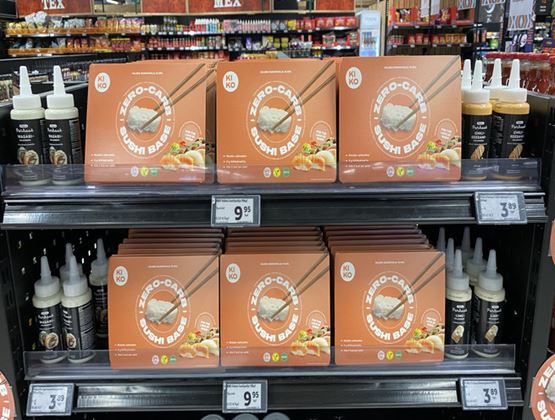
Low in calories, rich in fibre, vegan and designed for keto, gluten-free and health-conscious diets, KIKO Zero-Carb Sushi Base entered a food market increasingly shaped by flexibility. Its proposition was not to remove pleasure from sushi, but to remove some of the barriers around it. Rice is central to the sushi experience, but it is also a source of carbohydrates and calories. KIKO King Konjac approached the category differently, using konjac to create a base that could offer indulgence, convenience and dietary compatibility in one format.
A SIAL Innovation effect with international reach
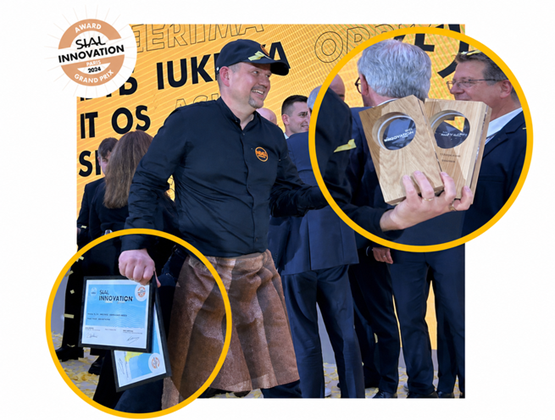
SIAL Innovation is one of the flagship platforms at SIAL Paris. In 2026, the competition will celebrate its 30th anniversary, confirming its role as a global springboard for products that help decode where the food industry is moving next. For selected brands, the competition offers more than visibility. It places innovation in front of buyers, journalists, chefs, distributors and food professionals looking for products with genuine market potential.
For KIKO King Konjac, the effect was immediate. “The highlight was seeing our Zero-Carb Sushi Base capture the attention of buyers, journalists, and chefs from every continent,” the brand explains. “It confirmed to us that we had created something both unique and globally relevant.”
That validation was important because the product was not only new. It was also crossing categories. KIKO Zero-Carb Sushi Base sits somewhere between a health food, a sushi ingredient, a convenience product and a sustainable staple. This hybrid identity gave it a strong point of difference at a show where buyers are looking for novelty and ideas that can travel.
The brand says the SIAL Innovation award “opened doors at the highest level”. Since its participation, KIKO King Konjac says the product has entered major national supermarket selections, while also being adopted by sushi operators and large Horeca distributors. The company also reports having sold hundreds of thousands of KIKO units and received coverage in more than 60 international articles, including a founder interview in the largest daily newspaper in the Nordic region.
From alternative ingredient to all-diets staple
KIKO King Konjac’s success rests on a clear reading of consumer demand. The brand describes its product as “delicious, healthy, and ecological food”, adding that KIKO Sushi Base is “indulgent yet nearly calorie-free, rich in fibre, eco-friendly, and convenient”.
That combination is central to its market relevance. Consumers are no longer divided neatly into single dietary tribes. One household may include a vegan, a flexitarian, a gluten-free consumer and someone following a low-carb or keto diet. Foodservice operators face the same complexity, especially in international and urban markets where dietary expectations are varied and fast-moving.
KIKO’s answer is to behave like a universal base. The brand calls it a “modern all-diets staple”, suitable for vegan, keto, gluten-free and wider health-conscious eating. For sushi restaurants, this creates a practical route to menu diversification without radically changing the format of the product being served. For retailers, it offers a recognisable eating occasion with a strong health and convenience angle.
The product also speaks to the growing importance of staple reinvention. Innovation in food is not only happening in snacks, beverages or premium treats. It is increasingly entering the basic building blocks of everyday meals: rice, pasta, bread, flour, proteins and cooking bases. When those staples are reformulated around fibre, lower energy density or reduced environmental impact, they can influence eating habits at scale.
Scaling with certification and lower-energy production
Since SIAL Paris 2024, KIKO King Konjac has been working to move from breakthrough product to scalable platform. The brand says it has built four new production facilities, while keeping the model modular and energy efficient. It also states that all operations run on 100% wind power.
This operational narrative matters. In today’s food sector, an innovation cannot rely only on a strong concept. Buyers want to know whether a product can be produced reliably, certified properly and adapted to different distribution channels. KIKO King Konjac is building that foundation through certification as well as production scale.
The company says it has achieved organic certification, the Domestic Heart Symbol, gluten-free certification and vegan V-label certification. It has also secured two EFSA health claims, while halal and kosher certification remain in progress. This matters because the brand’s ambition is explicitly international. A product positioned as “for everyone” needs to meet dietary, cultural and regulatory expectations across markets.
Returning to the food innovation stage
Looking back, KIKO King Konjac describes SIAL Paris as a turning point. “SIAL gave us global credibility,” the brand explains. “It turned a promising innovation into a validated success story and connected us with an international network that continues to support our growth.”
KIKO King Konjac is set to return to SIAL Paris 2026, which will take place from 17 to 21 October 2026 at Paris Nord Villepinte. The brand sees the event as its “natural stage” and positions its story as an example of how an award can generate international impact.
For a brand built around the idea that sushi can be lighter, more inclusive and more ecological without losing its appeal, the return feels logical. KIKO King Konjac’s journey shows how food innovation can begin with one specific eating occasion, then expand into a wider question for the industry. The future of staples may not be about removing pleasure from the plate. It may be about redesigning familiar foods so they can carry more of what today’s consumers expect.