
MILK AND DAIRY PRODUCTS ARE CHANGING

World Milk Day, marked on 1 June, arrives at a telling moment for dairy. Milk is one of the world’s most familiar foods, yet the category is anything but static. Global milk production reached an estimated 982 million tonnes in 2024, while India, the world’s largest producer, reported nearly 248 million tonnes in 2024-25, up from 239 million tonnes the previous year.
In France, the sector remains deeply rooted in agricultural, industrial and culinary life. It is also a major export category. In 2024, French dairy exports to the United States alone were worth around €300 million, with cheese accounting for about two thirds of that total. France also remains one of the world’s leading cheese exporters by value, supported by hundreds of regional cheeses, protected origin labels and a premium image that continues to travel far beyond its domestic market.
A staple category with new demands
Milk, cheese, yoghurt, butter and cream still anchor food cultures across continents. Cheese alone absorbs a major share of milk production, with the European Union estimated at 9.833 million tonnes of cheese in 2024 and the United States at 6.466 million tonnes.
Yet the old codes are changing. Consumers still want taste and nutrition, but they also want to understand where products come from, how animals are raised, how milk is collected and how brands manage their environmental footprint. Sustainable milk is therefore not only about lower emissions or better farm practices. It is also about responsible sourcing, traceability, local relationships and clearer communication.
This explains the growing interest in short supply routes and direct farm models. Milk taps and vending machines allow consumers to buy local milk directly from farms or nearby collection points. The model has a simple appeal: visible origin, reduced distance between farmer and consumer, and a fresher sense of connection. For dairy brands, it signals a wider expectation. The product is no longer enough on its own. Its story, route and proof points matter.
Protein, whey and the return of functional dairy
Health is one of the strongest engines behind dairy innovation. The category has moved beyond the traditional glass of milk or family yoghurt pot into protein-enriched drinks, whey-based beverages and compact snacks designed for busy consumers. Arla, one of Europe’s largest dairy cooperatives, recently linked current demand for high-protein products such as whey and cottage cheese to broader health trends and, in some markets, to changing eating habits around weight-management drugs.
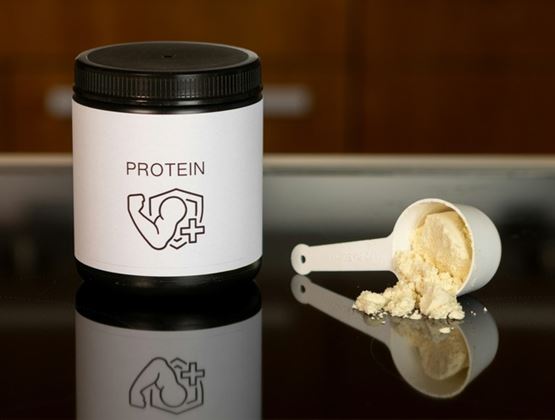
This protein wave is visible in everyday formats. Cottage cheese has returned as a high-protein snack and is seeing greater adoption in Europe. Cheese strings have been repositioned from children’s lunchboxes to portion-controlled snacking. Protein pouches, drinkable yoghourts and fortified dairy beverages sit comfortably between sports nutrition, convenience food and mainstream grocery. Whey, once viewed largely as a by-product of cheesemaking, has become a valuable ingredient for performance, satiety and formulation.
Fermentation adds another layer. Kefir, skyr, probiotic yoghurts and cultured drinks benefit from growing interest in gut health, while fermented dairy also gives brands room to work with acidity, texture and flavour. In a crowded chilled aisle, fermentation can provide both nutritional meaning and sensory distinction.
Alternative milks broaden the dairy conversation
The dairy aisle now stretches far beyond cow’s milk. Sheep and goat’s milk appeal to consumers looking for distinct flavour, digestibility or traditional Mediterranean and Middle Eastern references. Plant-based alternatives, including oat, almond, coconut, rice and soy, have made milk alternatives part of mainstream purchasing. Banana milk is also entering the conversation, with Kunana, winner of the Gold Innovation Award at SIAL Canada, showing how fruit-based alternatives can bring both novelty and natural sweetness to the category .
This diversification does not necessarily mean the end of conventional dairy. It creates a broader “milk moment”, where consumers move between dairy and alternatives depending on occasion, taste, nutrition, ethics or tolerance. A cappuccino might call for oat milk, a traditional dessert for cow’s milk, a fresh cheese for goat’s milk, and a functional drink for whey protein.
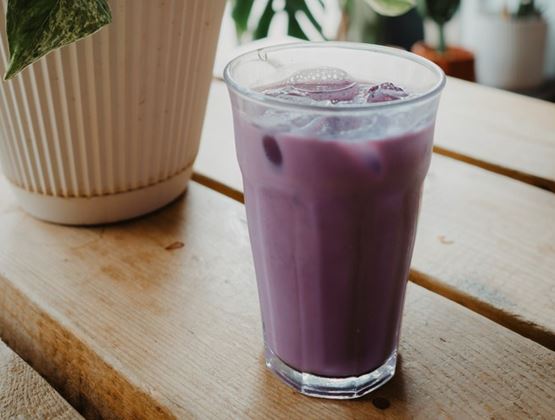
Flavoured beverages are also becoming more ambitious. Matcha lattes, made with finely ground Japanese green tea powder, bring vegetal bitterness, colour and a strong wellness association. Ube lattes, built around purple yams rooted in Filipino food culture, offer a vivid violet tone and a sweet, nutty profile. These drinks show how dairy and milk alternatives are borrowing from café culture, Asian flavours and social media aesthetics. Taste is no longer separated from visual appeal.
Dairy at SIAL Paris: business, innovation and trust
Dairy products form an important business sector at Sial Paris, where milk, cheese, yoghurt, fermented products, ingredients and alternatives sit within the wider global food marketplace. For buyers, distributors and manufacturers, the category brings together some of the biggest tensions shaping the food industry trade show landscape: affordability and premiumisation, tradition and reformulation, animal-based and plant-based, local sourcing and global trade.
A recent SIAL Unpack video on dairy and milk alternatives adds another useful lens, showing how the category is being reshaped through innovation, new usage moments and changing expectations around health, sustainability and pleasure. Its relevance lies in the fact that dairy is not moving in a single direction. It is becoming more fragmented, more functional and more experiential.
For World Milk Day, that may be the most important point. Milk remains a foundational food, but the dairy economy around it is being rebuilt through transparency, protein, fermentation, alternative sources and cultural creativity. At SIAL Paris, this evolution will continue to unfold across exhibitors, innovation showcases and buyer conversations, confirming dairy’s place not only as a heritage category, but as a living field of food innovation.
Image credits:
Frank Huang - Unsplash
Alex Saks - Unsplash