
CONVICTION, CONSTRAINT AND THE RISE OF FOOD ACTIVISM

Sial Paris’ latest white paper on key trends in personalised nutrition, New Era of Food, highlights two powerful and sometimes opposing forces shaping consumption today: conviction and constraint. On one hand, consumers seek meaning, ethics and identity through food. On the other, they face financial pressure, geopolitical instability and resource limitations that demand pragmatism. It is within this tension that food activism has emerged not as a niche phenomenon, but as a structural dynamic redefining the global food industry sectors.
Across markets, food has become a visible arena in which personal values and economic realities intersect. Eating is no longer a neutral act. It reflects political beliefs, environmental awareness, budgetary limits and cultural positioning. The plate has become both a space of expression and a site of negotiation.
Constraint as catalyst: economic pressure and resourcefulness
The current economic climate has reshaped everyday food behaviour. According to Eurostat, annual food inflation in the European Union peaked above 19 per cent in early 2023 before gradually easing, leaving lasting effects on household budgets. In response, consumers have recalibrated their priorities.

One visible outcome is the revival of resourcefulness. Batch cooking, once associated with domestic routine, has taken on renewed relevance as a practical strategy for navigating tighter budgets. Preparing larger quantities of soups, stews or grain-based dishes in a single session allows households to optimise energy use, reduce impulse purchases and portion meals across the week. It transforms the kitchen into a space of forward planning, where time and ingredients are managed with precision rather than spontaneity.
Home preservation follows a similar logic. Freezing seasonal produce, bottling sauces, fermenting vegetables or turning surplus fruit into jams extends shelf life and reduces reliance on last-minute shopping. These practices, rooted in older culinary traditions, are being reinterpreted by a generation seeking both savings and autonomy.
Google searches related to “meals under €5” have also surged across European recipe platforms, reflecting a desire to control expenditure while maintaining quality. Retailers have also reported increased demand for private labels and promotional formats.
Food waste reduction is another area where constraint meets conviction. The United Nations Environment Programme’s most recent Food Waste Index, published in 2024 estimates that 1.05 billion tonnes of food were wasted globally in 2022, with households accounting for 60 per cent of that total. In Europe, anti-waste initiatives have moved from activism to mainstream retail strategy. “Imperfect produce” ranges, recovery baskets and discounted near-expiry products are now embedded in supermarket assortments. In France, anti-waste products are often sold at discounts of 30 to 50 per cent near expiry dates, encouraged by national legislation such as the 2016 Garot Law prohibiting supermarket food destruction.
Recovery baskets typically consist of assortments of surplus, short-dated or cosmetically imperfect items grouped together and sold at a reduced fixed price. They may include fresh fruit and vegetables approaching their best-before date, bakery items from the previous day, or packaged goods with damaged outer wrapping but intact contents. Often presented as “anti-waste boxes” near store exits or offered through dedicated apps, these baskets provide retailers with a structured way to reduce disposal volumes while offering consumers tangible savings.
This practical activism is not necessarily ideological. It is often motivated by necessity. Yet it contributes to a broader cultural shift in which efficiency, thrift and responsibility are increasingly recognised and encouraged. Constraint, in this sense, becomes a catalyst for behavioural change.
The search for meaning and transparency
Parallel to financial considerations runs a strong current of conviction. Consumers increasingly seek naturalness, transparency and ethical coherence in their food choices.
Values-driven consumption continues to shape the market. According to a recent Voice of the Consumer Survey, 46 per cent of global consumers report buying more sustainable products, while many indicate a willingness to pay a small premium when environmental credentials are credible. Meanwhile, industry projections indicate that the European organic market remains above €50 billion in retail value, consolidating its position as one of the largest globally despite ongoing price sensitivity. Even in a climate of economic constraint, demand for transparency, natural products and responsible sourcing continues to exert structural influence over purchasing decisions.
This search for meaning also manifests in the “less but better” philosophy. Consumers may reduce meat consumption not only for budgetary reasons, but to align with environmental or health convictions. Alternatively, others embrace high-quality animal products from regenerative systems, positioning themselves as “conscious carnivores”. These divergent choices illustrate how food has become an identity marker.
Locavorism, farm-to-table narratives and clean label formulations respond to the desire for clarity in a complex supply chain. Increasingly, this clarity extends beyond origin to measurable environmental impact, with carbon footprint information becoming part of the transparency equation and even a baseline expectation. Some retailers and brands now pilot on-pack carbon labelling or publish lifecycle assessments to quantify greenhouse gas emissions per product, reflecting growing consumer interest in climate impact.
Eating becomes political
Food activism today extends beyond individual lifestyle choices. It encompasses collective action and political signalling. Diets are framed as expressions of belief systems, and brands are evaluated on their social and environmental stances.
Plant-based eating has grown significantly over the past decade. The global vegan food market size was estimated at USD 22.14 billion in 2025 and is projected to reach USD 52.56 billion by 2033. At the same time, counter-movements celebrating meat consumption have gained visibility on social media platforms, reflecting polarisation rather than consensus.
Beyond diet composition, issues such as animal welfare, labour practices, packaging waste and geopolitical positioning can influence brand perception. Social justice concerns are increasingly woven into food narratives, from fair trade sourcing to community support initiatives.
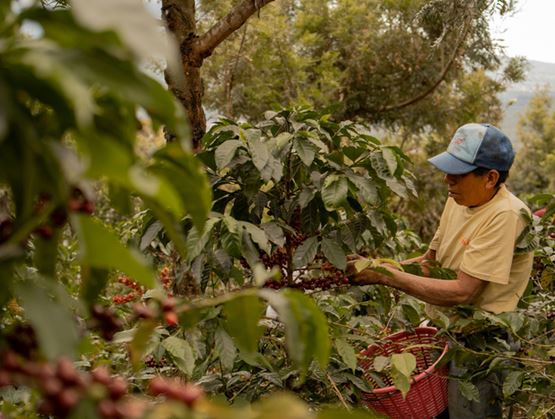
This politicisation does not necessarily translate into uniform behaviour. There is often a gap between stated values and purchasing reality. However, the symbolic dimension of food has intensified. Choosing one product over another can be perceived as endorsing a cause.
A new equilibrium for the food sector
For industry stakeholders, the rise of food activism represents both risk and opportunity. Brands must operate in an environment where economic volatility coexists with heightened ethical scrutiny. Price sensitivity cannot be ignored, yet neither can the demand for transparency and responsibility.
Innovation increasingly lies in reconciling these dimensions. Affordable sustainability, accessible quality and clear communication are becoming strategic imperatives. The most resilient players in the food sector will likely be those able to address constraint without dismissing conviction.
As these dynamics continue to unfold, global gatherings provide a forum for reflection and exchange. At Sial Paris, discussions around consumer behaviour, sustainability and innovation illustrate how deeply activism and pragmatism are reshaping the industry. In an era where every purchase carries weight, the plate has become a mirror of broader societal tensions and aspirations. The future of food will be shaped not only by what is produced, but by what it represents.
Image credits:
Ella Olsson - Pexels
Llio Angharad - Unsplash
Shelby Murphy Figueroa - Unsplash