
PERSONALISED NUTRITION: A MARKET IN TRANSITION

How can we define personalised nutrition today? Why is it becoming so important now?
Personalised nutrition refers to all food offerings that are tailored to an individual or a given situation, not only in terms of health objectives, but also in terms of lifestyle, budget, constraints, culture or beliefs. This ranges from composition to format (portion size) and usage (snacking) to data-driven personalisation (metabolic profile, microbiome, tracking).
The reason this topic is gaining so much traction is that consumers are seeking to regain control over their daily lives. Between mental fatigue, preventive health, fragmented households and digital influence, food is becoming a concrete, immediate and adaptable tool.
Through their connection to the world and networks, consumers are mega informed and ultra-aware of their bodies, their needs, possibilities and alternatives, impacts, etc.
With the proliferation of influences, consumers are becoming experts themselves. They are listening to themselves more, observing and adapting their diets according to recommendations and what they learn.
There are six key factors that explain this transition:
Health and metabolic pressure:
the increase in digestive, inflammatory and metabolic disorders is driving a shift towards more targeted and preventive nutrition.
Better access to biological data:
blood sugar, microbiome, DNA and personal sensors make the body's reactions measurable, creating an expectation of precise adjustment.
Shift of power to the consumer:
individuals arbitrate, test and validate through use rather than through top-down prescription.
Acceleration of lifestyles:
consumers are looking for formats that are fast, portable and compatible with fragmented rhythms.
Social and cultural influence:
social networks and communities shape preferences and accelerate the adoption of new dietary codes.
Micro-segmentation of supply:
the market is structured by functional benefits (energy, sleep, cognition, hormonal, low-spike) rather than by product categories.
Personalised nutrition is not a fad. It responds to a society that has become pluralistic, measured, demanding and culturally connected, where a single solution is no longer enough.
Why is food changing? What major trends do you see?
Food is changing because society itself has become more diverse, fragmented and demanding. There is no longer just one way to eat well: motivations are diversifying and profoundly reshaping the market.
Pleasure is returning to the forefront, but in a more conscious way, while well-being is expanding to include a search for overall balance. Eating is also becoming an act of personal expression, conveying values and identity. Habits are becoming more individualised, adapting to the constraints of everyday life and drawing heavily on cultural and social influences. At the same time, nutrition is increasingly part of a logic of optimising the body and mind.
What is particularly striking is the coexistence of these dynamics. Food no longer follows a single model: it reflects multiple life strategies, which now profoundly structure the market.
How does this transform the strategies of manufacturers and brands? Is there an opportunity to move upmarket?
This transforms strategies on several levels. Brands no longer sell just a product, but a promise linked to a use, a benefit or a moment. This encourages rethinking formulation, format, education and distribution.
Personalised nutrition can clearly be a driver for moving upmarket, especially when it is based on evidence (ingredients, sourcing, benefits) and experience (rituals, journeys, services).
What are the obstacles to widespread adoption?
The main obstacles are accessibility and price: some models remain more expensive, particularly for health products. Clarity is also a barrier, as too many promises and options can confuse consumers. The issue of trust is central, whether it concerns scientific evidence, the credibility of benefits or the risk of ‘health washing’.
Data is another major issue, particularly in terms of protection, transparency and understanding of the actual use of the information collected. The regulatory framework also raises questions, due to the sometimes blurred boundaries between food, supplements and health claims. Finally, there is the risk of potential inequality if personalisation becomes reserved for those who can pay for or understand it.
Are there countries that are more focused on ‘performance/health’ than ‘pleasure/well-being’?
Yes, perceptions and priorities vary. Some markets are more naturally inclined towards performance and optimisation, with a culture of measurement and protocol. Others place greater value on well-being, gentle routines or pleasure combined with health.
Overall trend is converging: everywhere we see a hybridisation between pleasure and functionality, benefit and performance, with products that seek to be desirable, effective and suitable for everyday use.
Certain geographical areas are more oriented towards performance, health and optimisation.
In the United States, for example, the culture of quantified self, biohacking, tracking and longevity science strongly structures the market. Consumers are particularly receptive to measurable products, scientific arguments and so-called ‘high performance’ solutions.
In East Asia, particularly South Korea, Japan and Singapore, the culture of prevention is deeply rooted, with strong momentum in food-tech innovation and advanced functional formats.
Nordic countries such as Denmark, Sweden and Finland take a rational approach, characterised by transparency and trust in science. The market there is structured around functional benefits and public health issues.
Conversely, other areas place greater emphasis on pleasure, well-being and a holistic approach. In France, Italy and Spain, pleasure remains central. Health is integrated, but rarely separated from taste, tradition and ritual. In the wider Mediterranean region, food is part of a more cultural and convivial approach, where health is part of a way of life.
Finally, some regions are developing hybrid models, combining performance and well-being. In China, personalisation is the result of a fusion between traditional medicine and cutting-edge technologies, combining cultural heritage and scientific innovation. In the Emirates and Gulf countries, investment in health, lifestyle and performance is significant, with a strong premium and experiential dimension.
Which regions could become unexpected leaders?
The unexpected leaders will likely be those that combine three factors: a strong culture of wellbeing, dynamic retail innovation and industrial capacity for rapid deployment.
Certain areas of Southeast Asia could emerge as leaders, due to their great agility in terms of formats, digital technology and food culture. The Nordic countries are also serious contenders, with a strong history of transparency, public health and nutritional innovation. Finally, the Gulf region is attracting attention with its massive investments in health and lifestyle, as well as retail and hospitality ecosystems capable of rapidly testing new concepts.
Does personalisation strengthen loyalty or fuel a constant quest for novelty?
Both coexist. Personalisation can strengthen the relationship between the brand and the consumer when it is part of a useful and credible routine. The more the product becomes an everyday ‘companion’, the more emotion and loyalty increase.
But digital influence and the culture of constant testing also create pressure for novelty, particularly for so-called ‘cultural’ and viral products. The challenge for brands is therefore to build a sustainable, sincere and useful foundation, while maintaining the ability to adapt quickly.
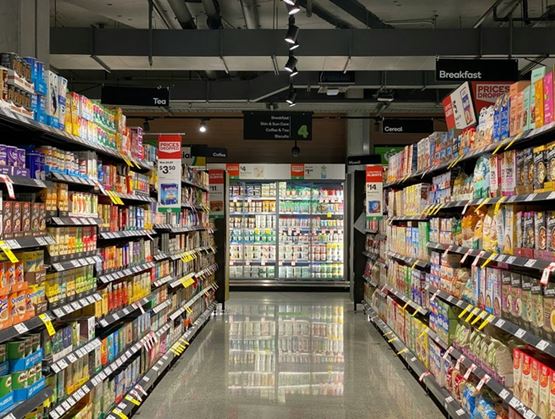
What will grocery aisles look like in ten years if personalisation becomes the norm?
They will probably no longer be organised by product category, but rather by intention, benefit and moment in life: energy, sleep, digestion, mood, performance, longevity, constraints and diets.
Aisles will become more educational, more segmented, with more visible evidence (sourcing, benefits, scores) and more individual and modular formats. Digital technology (apps, robotics, customer journeys) will play an increasingly important role in guiding choices, including in-store.
In terms of health and performance, we can also envisage even more hybrid formats combining medicine and the world of health, as well as ultra-personalised customer journeys based on individual and precise data.
Was there anything surprising in the results of the study?
What is surprising is the extent to which personalised nutrition goes beyond health. It is driven as much by pleasure, culture and identity as by functional objectives.
In other words, personalisation is not just ‘medical’ or ‘scientific’: it is also emotional, social and narrative.
Why is it strategic to address these topics at SIAL Paris?
It’s important because personalised nutrition is not a siloed endeavour. It involves the entire chain: formulation, ingredients, packaging, data, retail, catering, logistics, regulation and communication. It requires bridges between professions and areas of expertise to transform market intuition into concrete responses.
SIAL Paris is precisely the place where these players come together. The conversation initiated in the white paper will go beyond its editorial framework to take shape at the show. There will be a SIAL Summit dedicated to personalised nutrition which will bring together experts to explore the issues in depth, exchange views and place the subject at the heart of professional debate. The objective is clear: to make this theme a structured forum for exchange and a driver for action for the entire ecosystem.
What is the purpose of the white paper? Would you like to add anything else?
The white paper has two purposes. First, it provides a structured framework for understanding personalised nutrition beyond the hype. Second, it translates these findings into concrete implications for manufacturers, brands and distributors: where to invest, how to innovate, how to remain credible.
What I would add is that personalised nutrition is not just another ‘segment’. It is a paradigm shift. The winners will be those who can make personalisation simple, understandable, desirable and accessible, without overpromising and always staying true to their brand DNA.
One thing is clear from this discussion: personalised nutrition is no longer an emerging idea, but a reality that is taking hold. It is changing the way brands think about their products and the way consumers make their choices.
To go further and better understand these developments, the white paper provides an in-depth look at the issues at stake and measures their concrete implications.
Image credit:
NellyrodiNellyrodi
Franki Chamaki for Unsplash