
FREIGHT WITH A LIGHTER FOOTPRINT

Food has always travelled. Coffee crosses oceans, grain moves by rail, fresh produce depends on chilled trucks, and ingredients often pass through several countries before reaching a factory, restaurant or supermarket shelf. What is changing is the expectation placed on those journeys.
At SIAL Paris 2026, the route a product takes to market becomes as revealing as the product itself. SIAL For Change, launched in 2024 by SIAL Paris in partnership with CSR agency Hyssop, is dedicated to recognising companies that have embedded corporate social responsibility into their strategy and operations. In 2026, it will take on a larger role as an immersive space in Hall 6, designed to highlight concrete commitments, showcase responsible initiatives and help the international agri-food ecosystem understand the social and environmental transitions shaping the industry.
Transport is no longer treated as an invisible back-office function. It is becoming part of the product story, the sustainability strategy and, increasingly, the buyer’s decision. For the agri-food industry, this shift is particularly sharp. Many products are perishable, temperature-sensitive or exposed to volatile trade routes. Logistics must therefore be cleaner, but also resilient. The result is a wave of experimentation, from sailing cargo vessels and rail corridors to inland waterways, electric delivery fleets, smarter cold chains and low-carbon urban hubs.
Sailing cargo returns with a modern brief
International shipping remains one of the most efficient freight modes per tonne transported, but it is also a major emissions source. The pressure is rising because shipping’s climate footprint is moving in the wrong direction. According to OECD estimates published in 2026, global maritime transport emissions increased from 889 million tonnes of CO₂ in 2019 to 973 million tonnes in 2024, a 9.4% rise, while container ship emissions grew by 14.7% worldwide over the same period.
The most poetic innovation in freight may also be one of the oldest. Wind-powered maritime transport is returning, not as nostalgia, but as a niche solution for brands willing to build lower-carbon routes into their identity. Companies such as TOWT, Grain de Sail Logistics and VELA are giving the sailing cargo vessel a contemporary commercial role.
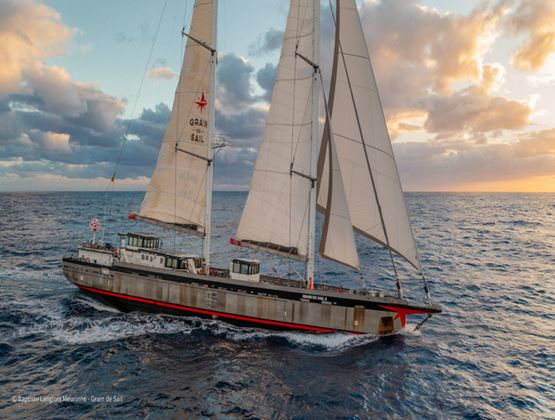
TOWT’s Anemos made its first call at Le Havre in August 2024 before a transatlantic voyage to New York, carrying more than 1,000 tonnes of cargo. Grain de Sail Logistics promotes wind-powered shipping integrated into existing logistics patterns, with transatlantic and European crossings and an average carbon footprint reduction of 95% overall. VELA’s argument is not only environmental. The French start-up says its 100% wind-powered transatlantic service can move goods between France and the United States in under 15 days, making it two to four times faster than conventional ocean freight. Its 65-metre trimaran is designed to carry 350 tonnes between Nouvelle-Aquitaine and New York in under two weeks, including loading and unloading, with cold-chain capacity for sensitive goods.
Coffee, cocoa, wine, spirits, tea, dry groceries and premium ingredients can tolerate longer lead times better than highly perishable categories. Sailing freight also gives brands a visible way to communicate responsibility. A bag of coffee or bar of chocolate can carry a transport narrative that is both concrete and easy to understand. The limitation is scale. These vessels will not replace container shipping soon, but they can create premium, low-carbon lanes where brand value and emissions reduction meet.
Rail, rivers and the slower intelligence of modal shift
While sailing cargo captures attention, rail and inland waterways may carry more immediate potential at scale. The European Union’s Sustainable and Smart Mobility Strategy aims to increase rail freight traffic by 50% by 2030 and double it by 2050 compared with 2015, while inland waterways and short sea shipping are targeted for growth of 25% by 2030 and 50% by 2050.
The challenge is that Europe is not yet moving fast enough. Eurostat reported in March 2026 that, within EU territory in 2024, maritime transport represented 67.0% of freight transport performance in tonne-kilometres, road 25.7%, rail 5.4%, inland waterways 1.7% and air 0.2%.
For food companies, rail makes sense where flows are predictable, volumes are high and products can be consolidated. Grains, beverages, canned goods, frozen products and packaging materials can all benefit from longer-distance rail corridors. Inland waterways offer a similar opportunity, especially around ports, river basins and major distribution zones.
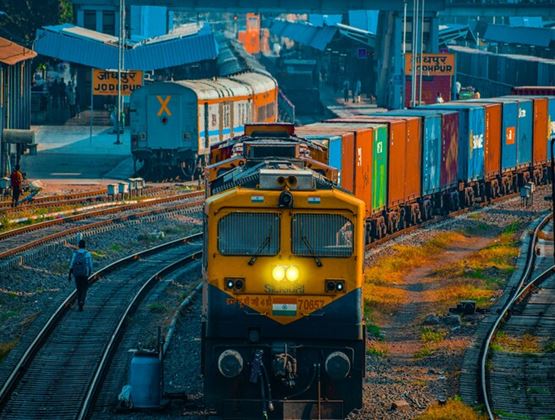
The difficulty lies in coordination. A single truck can be booked quickly. A multimodal chain demands planning, terminal access, loading compatibility, digital tracking and reliable handovers.
However, this is precisely where innovation is happening. The future is less about choosing one mode and more about orchestration. In Austria, Coca-Cola HBC has been working with Rail Cargo Group to shift freight from road to rail through multimodal transport, moving around 560 truck journeys onto rail within a year and saving up to one tonne of CO₂ per transport.
Around major ports, the same logic is visible in Rotterdam, where deep-sea containers can continue inland by rail or barge through European Gateway Services rather than relying only on road transport. In the UK, Varamis Rail has also shown how converted electric passenger trains can carry time-sensitive goods such as food and medical supplies overnight between major cities, offering a faster alternative to road for certain flows. The cleaner supply chain is therefore not built around a single heroic mode, but around better handovers: ship to barge, barge to rail, rail to warehouse, and electric truck for the final kilometres. For large food industry sectors, this kind of chain could become a competitive advantage as retailers and manufacturers demand more transparent emissions data.
Electric fleets and smarter cold chains
Road transport will remain essential, particularly for regional distribution and last-mile delivery. The cleaner question is therefore not whether trucks disappear, but how quickly fleets change. Electric vans are already becoming common in urban food delivery, while heavier electric trucks are moving from pilot projects into early commercial deployment.
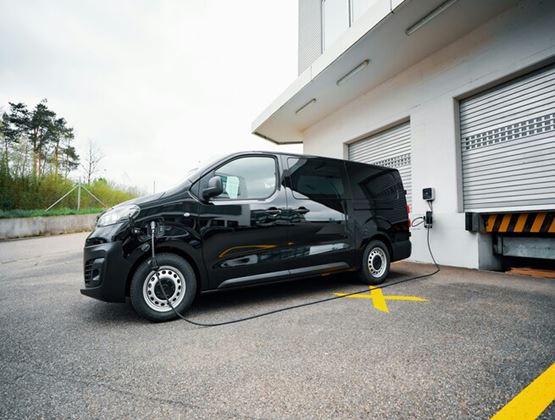
The International Energy Agency’s Global EV Outlook 2026 reported that electric truck sales more than doubled in 2025 compared with 2024, reaching 9% of all truck sales worldwide, with China driving most of the growth. For food logistics, this matters most in cities, where delivery frequency is high, routes are shorter and charging can be organised around depots. Supermarket replenishment, restaurant supply, meal delivery, wholesale markets and cold-chain distribution all lend themselves to electrified urban loops.
The cold chain is another critical frontier. Refrigeration is essential for fresh meat, dairy, seafood, frozen food and ready meals, but it adds energy demand and complexity. Digital monitoring, route optimisation, predictive maintenance and connected refrigerated containers can reduce product loss as well as emissions. This is not only a climate issue. For food companies, fewer temperature breaks mean fewer rejected loads, stronger food safety and better margins.
Other ideas are emerging around consolidation hubs, cargo bikes for dense urban zones, reusable transport packaging, biofuels for specific heavy-duty routes, hydrogen trials and AI-assisted load planning. None is a silver bullet. Together, however, they point to a logistics model based on precision rather than brute movement.
From supply chain cost to brand value
Clean logistics is beginning to shift from compliance language to commercial language. A premium chocolate brand may choose sail freight for storytelling. A retailer may favour suppliers with verified lower-carbon delivery. A frozen food manufacturer may invest in smarter cold-chain monitoring to cut waste. A multinational may move more dry goods by rail to reduce exposure to road congestion and fuel volatility.
The strongest strategies will be pragmatic. The real transformation lies in matching each product, distance, temperature requirement and delivery promise with the most responsible feasible mode.
This conversation will increasingly matter at Sial Paris, where the food innovation exhibition is not only about what is produced, but how it reaches the market. As food companies face pressure to decarbonise, protect margins and reassure buyers, logistics is becoming part of innovation itself. SIAL For Change gives that shift a sharper frame, bringing responsible commitments into view and showing how sustainability now runs through sourcing, production, transport and distribution. The next frontier of responsible food may not be found only in the recipe, the packaging or the ingredient list. It may be found in the route.
Image credits:
Chuttersnap - Unsplash
Anirudh - Unsplash
Baptiste Langlois Meurinne - Grain de Sail
JUICE - Unsplash