SIAL PARIS BACKS YOUNG TALENT AT HACK THE FORK 2025


The hackathon’s ambition went far beyond a competition format. It introduced a free mentorship programme giving early-career talent continued access to experts, meet-ups and incubator connections. According to the organisers, this long-term support reflects the initiative’s mission: to encourage impact-driven careers that combine scientific progress, social value and responsible entrepreneurship.
SIAL Paris champions emerging foodtech talent
SIAL Paris played a central role in this first edition, with its Director, Audrey Ashworth, joining the multidisciplinary jury. For the world’s leading food innovation exhibition, supporting Hack the Fork was more than symbolic. SIAL Paris has long positioned innovation as a cornerstone of its identity, spotlighting breakthroughs through SIAL Innovation and acting as a global meeting point for ideas that shape the food sector. Participating in a hackathon dedicated to sustainable food and AI aligns naturally with this mission.
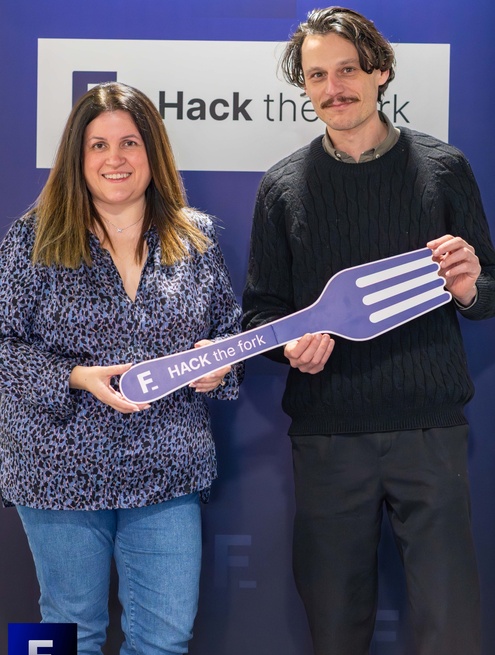
Throughout the judging sessions, Audrey Ashworth and her fellow jury members evaluated each project’s technical execution, economic feasibility and potential for positive impact. For her, the event provided a privileged window into the imagination and determination of the next generation. “I was delighted to be a member of the Hack the Fork jury and to discover young people who are ready to take on the challenges of tomorrow's agri-food industry,” she said. “Innovation fuels us. Every day. Innovating means rejecting the status quo and embracing momentum. AI opens up incredible opportunities to innovate and come up with new solutions. Being witness to this creative momentum confirms that the future is built on boldness and imagination.
This perspective mirrors SIAL Paris’s broader strategy. As a global platform for food innovation, the exhibition recognises that the sector’s evolution increasingly depends on cross-disciplinary talent, AI literacy and the ability to translate scientific insights into commercially viable products. By encouraging young developers, engineers, agronomists and entrepreneurs to explore plant-based solutions and sustainable models, SIAL Paris helps cultivate the ecosystem that will influence the industry’s trajectory for decades to come.
Building momentum for sustainable plant-based solutions
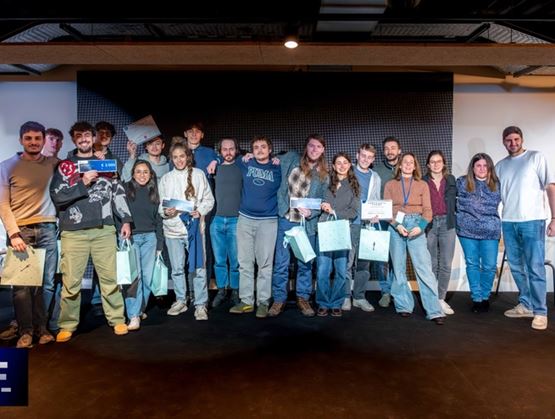
The projects emerging from Hack the Fork revealed the breadth of possibilities at the intersection of AI and food system transformation. The winning team, Ardoise, secured the €3,000 first prize for an AI-powered platform helping public canteens adopt plant-based meals. Their solution streamlines EGAlim compliance and provides an accessible tool for institutions seeking to reduce their environmental footprint while maintaining affordability and nutritional value.
Second place went to ReaKt, whose smart bioreactor autopilot applies predictive control to fermentation processes, accelerating the development of new plant-based ingredients. Third place, in the B2B category, was awarded to BlendIn, which uses AI to redesign existing recipes in order to cut costs, emissions and animal-based ingredients without compromising taste or nutrition.
Community awards highlighted the human dimension of the hackathon, celebrating participants who demonstrated exceptional engagement, networking enthusiasm or communicative energy. Winners such as Nora Todeschini and Imane Rakraki illustrated how collaboration and curiosity are as important as technical expertise.
Why these initiatives matter for the global food sector
Hack the Fork’s success demonstrates a growing appetite among young talent to meaningfully influence the future of food, particularly through AI. It also reflects a shift in how innovation is cultivated in the sector. Students and early-stage professionals increasingly expect learning environments that combine scientific challenge, entrepreneurial experimentation and purpose-driven impact. Events like this allow them to imagine careers that contribute both to personal fulfilment and collective progress.
For SIAL Paris, investing time and expertise in such initiatives strengthens its role as a global connector. By supporting the emergence of potential future unicorns, the exhibition deepens its relationship with the innovators who will shape the food sector, reformulate recipes, redesign production lines and re-engineer food systems. Its involvement signals a commitment to nurturing talent long before it reaches the exhibition halls.
For the young participants who filled the rooms of École 42 with algorithms, prototypes and vibrant debate, the weekend marked the beginning of a journey. And for SIAL Paris, it reaffirmed a core conviction: the future of the agri-food industry will be built by those who dare to challenge conventions and imagine a better way forward.
Image credits: Diane Fairshot