
DISCOVER THE NEXT WAVE OF FOOD INNOVATION WITH SIAL INSIGHTS

Available now on YouTube, the SIAL Insights broadcast forms part of the wider SIAL Insights programme, which provides industry professionals with early signals and strategic analysis ahead of SIAL Paris. In just under an hour, the panellists manage to crack open many of the big questions facing brands and retailers: how to innovate when 70% of launches still fail, how to navigate the “GLP-1 effect”, why snacking keeps booming, and what ageing populations and shrinking households really mean for tomorrow’s product ranges. For professionals planning their next move ahead of the 2026 food innovation exhibition, the video offers both reassurance and a call to rethink long-held assumptions.
Participants include Audrey Ashworth, Director of SIAL Paris; Karine Perrot from Kantar; Xavier Terlet from Protéines XTC; and Maria Bertoch and Emily Mayer from Circana, guided by moderator Jean-Gabriel Mollard. Together, they combine market data, long-term consumer insights and practical examples to map the food industry’s next chapter.
Audrey Ashworth, opens the discussion by highlighting the growing strategic role of SIAL Insights and its annual White Paper, which brings together the major trends shaping the global food industry. Holding this exchange between editions of the show, she explains, allows the team to step back, consolidate market research and offer clearer visibility on how consumer expectations are evolving.
She also presents the 2026 manifesto for the show, built around transition, sustainability, market understanding and the spotlighting of inspiring initiatives. Innovation, she notes, has always been part of SIAL Paris’s DNA, but the coming edition places it even more at the forefront. Through SIAL Insights, expert talks, the Summit and new on-site activations, the goal is to help professionals understand faster, decide faster and innovate more effectively in an approach designed to make innovation more accessible across the entire ecosystem.
Innovation is now a condition for survival
Karine Perrot brings the discussion to a central reality: innovation is no longer optional. With consumers more demanding than ever, only brands that are distinctive and meaningful can grow. However, around 70% of launches still fail in their first year. One major reason is that too many innovations are simple line extensions that cannibalise existing products instead of creating real value.
She outlines Kantar’s notion of “meaningful difference”: brands that stand out clearly, respond to strong trends and communicate a coherent story are far more likely to outperform competitors. To reduce risk, she emphasises the need to pair traditional market research with artificial intelligence. Research helps identify unmet needs and test concepts and packaging, while AI can rapidly detect emerging patterns and screen ideas at scale. The strongest innovation strategies for the coming years, she argues, will combine technological speed with human insight rather than relying on AI alone.
Functional health and “GLP-1 companions”
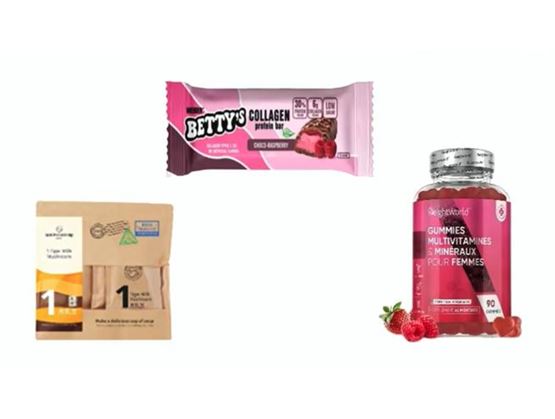
Xavier Terlet turns to health as a powerful, long-term engine of innovation. While organic and plant-based products remain strong, he notes a shift toward functional health: foods tailored to specific needs, life stages or lifestyles. This is driving a growing overlap between traditional food categories and nutraceuticals, visible in products such as supplement-style gummies, protein-enriched dairy, functional soups and specialised beverages. Consumers now expect food not only to avoid harm but to deliver tangible benefits while still providing pleasure.
He cites the rapid rise of GLP-1 treatments as a clear example. Originally used for type-2 diabetes and now widely adopted for weight loss, these medications have prompted manufacturers like Nestlé and Danone to develop “GLP-1 companions”: products formulated with the right nutrient balance to support people undergoing such treatments. For Terlet, this marks a new wave of innovation at the crossroads of medical care, lifestyle and everyday eating.
One of the key innovation drivers for 2026–2027 will be offering health, pleasure and practicality at accessible prices, a central challenge for any international food industry exhibition.
Snacking, out-of-home shifts and retail’s ready-to-eat role
Maria Bertoch shares Circana’s out-of-home data, focusing on five major European markets. Over the past five years, lunch has lost two percentage points of out-of-home visits, representing around one billion occasions, shifting consumption towards breakfast and afternoon snacking instead. Teleworking is a major driver. With over 40% of Europeans now working remotely at least part-time, routines have changed, making quick breakfasts out and flexible snacking more attractive. Cost also plays a role, with snacks averaging €4 versus €11 for a typical lunch.
A portion of consumers is willing to pay more for premium snacks, particularly in higher-income areas, when the offer is clearly differentiated, whether through indulgent ingredients or functional benefits like added protein.
Bertoch also highlights the rapid rise of ready-to-eat retail options. Salads, sandwiches, sushi and onigiri now form a significant “food-to-go” segment, representing around 6% of out-of-home spending in the five countries studied and growing at twice the pace of the broader foodservice market.
SIAL Paris is responding by creating a dedicated sector and hall for snacking, convenience and “on-the-go” concepts in 2026, giving visitors and grocery products exhibitors a clearer view of this rapidly expanding universe of ready-to-consume offers.
Ageing populations, smaller households and visibility in store
Emilie Mayer shifts the focus to demographics, noting that ageing populations and shrinking households across major markets are reshaping food demand. In France, for example, over-65s already represent more than a fifth of the population, a share set to rise sharply.
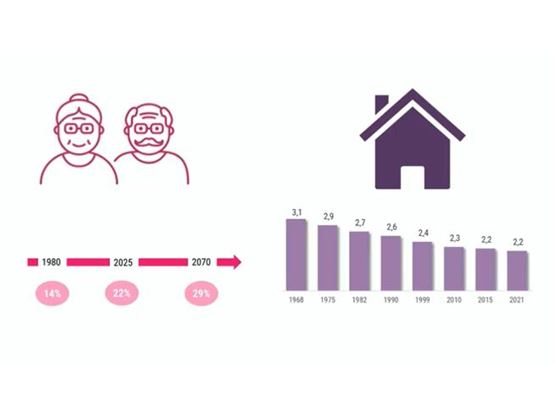
These changes influence everything from cooking habits to nutritional needs: older consumers tend to favour natural, minimally processed products, while smaller households require formats that are practical, portionable and well-priced. Even festive occasions need rethinking for people celebrating alone or in very small groups.
Such shifts call for new approaches to packaging and communication. Clear labelling, easy-to-open formats and strong on-pack readability become essential, particularly for seniors who hold significant purchasing power yet remain under-represented in advertising.
Mayer also highlights execution as a decisive factor. In crowded aisles, many innovations simply go unnoticed, making visibility tools such as multiple facings, secondary placements, in-store signage and distinctive pack design critical. The same applies online, where retail media and digital “end-caps” increasingly determine whether a new product is seen at all.
Insights to guide future strategies
The SIAL Insights panel offers a structured, data-rich roadmap for food and drink companies navigating a rapidly evolving landscape. For professionals in product development, marketing, retail buying or category management, the broadcast serves as a clear, concise briefing on where innovation is heading and the forces that will shape industry strategies in the coming years.
Watch the full SIAL Insights broadcast here.