
QUALITY DRIVING THE TRANSFORMATION OF THE FOOD INDUSTRY SECTOR

For food-chain players from farm to fork in the food processing industry, the challenges are many: ensuring safe food, controlling product quality, mastering operational risks, reducing environmental footprints and improving energy performance. It’s becoming increasingly important for the food sector to reflect on its current state and reaffirm its commitment to quality.
Safety first: Foodborne risks and evolving contexts
Food safety remains a foundation of quality in the food sector. According to the European Food Safety Authority (EFSA), even in markets with high regulatory standards, incidents of foodborne illness remain a serious issue. Climate change, intensified global trade and complex supply chains add new dimensions of risk. A report by the World Health Organization (WHO) notes that rising temperature and humidity, changing pest and pathogen patterns, and evolving production systems all raise food-safety hazards across the chain.
For businesses this means that quality systems cannot be static: they must continuously adapt. Certification standards such as Global Food Safety Initiative (GFSI)-recognised schemes and ISO 22000 continue to serve as essential frameworks. On World Quality Day, companies should ask: Are our food-safety cultures strong? Do our traceability systems capture upstream and downstream events? Are our suppliers and cold-chain partners aligned with our standards?
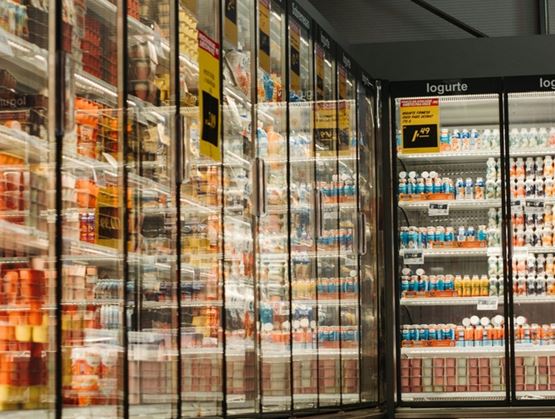
Product quality and risk control: meeting expectations
Product quality goes beyond mere compliance. It embraces consistency, sensory attributes, shelf life, branding promises and consumer expectations. The convergence of food safety and quality is increasingly recognised. A recent review highlights how the concept of quality has evolved, from simply avoiding hazards to proactively managing quality across the supply chain.
Risk management is central: identifying, assessing and controlling operational risks (e.g., contamination, allergen cross-contact, supply disruption) is part of quality assurance. At the same time, the agri-food sector is required to handle technical risks (machinery, automation), human risks (skills, hygiene culture) and environmental/social risks (resource depletion, labour issues). As one sector expert puts it, the agri-food industry must control “environmental, traceability and safety challenges in a more sustainable world”.
In practical terms, an effective quality programme will integrate hazard analysis (HACCP or similar), set critical control points, monitor process indicators, train personnel, perform internal audits and engage suppliers.
Reducing environmental impact: green quality
On World Quality Day, the focus should widen from product to planet. The agri-food industry is a significant contributor to environmental impacts. Greenhouse-gas emissions, water use, land use, waste, packaging burden and energy consumption all matter.
For many in the food sector, quality now includes sustainability metrics: reduction of food loss and waste, designing packaging for recyclability, sourcing raw materials responsibly, minimising water and energy usage, and reducing carbon footprints. For example, adopting life-cycle thinking helps businesses assess not just immediate production impacts, but upstream (agriculture inputs) and downstream (logistics, disposal) consequences.
Companies are responding with innovative solutions: one case study from the specialist Kersia, a leader in biosecurity and food safety providing products and solutions to prevent diseases and contamination in both animals and humans, illustrates how rising temperatures (+1 °C worldwide) amplify food-safety risks, such as increased salmonella incidence, and how the company is deploying sustainable biosecurity approaches that reduce energy and water use.
Efficiency & energy management: quality from within
Efficiency and energy management form a less obvious but critical pillar of quality in agri-food manufacturing. When plants optimise energy consumption, reduce downtimes, improve process yield and minimise waste, they deliver better quality products, lower costs and smaller environmental burdens.
Efficiency can mean upgrading to high-efficiency motors, optimising HVAC systems, capturing waste heat, improving refrigeration performance, improving process yield (less scrap, fewer rejects) and adopting digital monitoring. These actions feed both the economy and ecology. While not always foregrounded in “quality” discourse, they deserve acknowledgement on World Quality Day because they cement operational excellence.
Three priorities for the agri-food industry
As global food industry sectors reflect on the evolving meaning of quality, three priorities are increasingly shaping the agenda. First, organisations are moving toward integrated quality systems that bring together food safety, product integrity, environmental performance and operational efficiency. Certification frameworks are gradually adapting to this broader scope, prompting companies to reassess whether their management systems, leadership structures and internal cultures are aligned with this more holistic approach.
Digitalisation is also redefining what quality management looks like. Real-time monitoring tools, advanced traceability, production-line sensors, data analytics and smart packaging are giving companies unprecedented visibility and control. These technologies support everything from identifying contaminants and foreign objects to tracking equipment performance, reducing waste, optimising maintenance and monitoring energy use, capabilities that many actors are now scaling up rapidly.
A third shift is the embedding of sustainability within the very fabric of quality. Energy consumption, greenhouse-gas emissions, water use, waste reduction, responsible sourcing and circular-economy models now sit alongside microbiological safety and product specifications. For the agri-food sector, this expanded definition reflects a deeper transformation in how quality is measured, communicated and delivered.
Taken together, these developments show how quality has matured into a multidimensional concept, spanning safe products, resilient operations and environmentally responsible supply chains that create value for consumers, businesses and society alike. Food safety continues to be foundational, product consistency remains key to brand trust, and robust risk management supports operational continuity, while environmental and energy performance increasingly shape competitiveness and credibility.
As companies deepen their commitment to this broader vision, they strengthen both business performance and their role in building a safer, more sustainable and more efficient global food system.