
Galette des Rois: France’s Epiphany Ritual Between Tradition and Trends

Every winter, France eats an astonishing number of these “kings’ cakes”. Estimates vary, but around 30 to 32 million galettes are sold each year, with polls suggesting that more than 94% of French people eat at least one during the season, and many enjoy several.
A flaky crown for January
In its most classic form, the galette des rois is a round cake of laminated puff pastry, baked to a deep burnished gold and filled with frangipane, a rich cream made from ground almonds, butter, sugar and eggs. The top is usually scored with delicate patterns before baking, which fan out as the layers rise in the oven.
The cake is associated with Epiphany on 6 January, but in practice it dominates French bakery counters from late December through much of January. It is eaten at home with family, sliced up in offices and shared in schools and town halls. Many bakeries prepare galettes sized for four, six or eight people, along with individual slices for those who want a private celebration.
The galette is particularly common in northern and central France. In the south, a cousin known as the gâteau des rois takes over. Instead of puff pastry, this is a brioche-style crown decorated with candied fruits and coarse sugar, closer to the ring-shaped king cakes seen elsewhere in Europe. French overseas regions have created their own versions too, such as the Guianan galette enriched with coconut, cream or tropical fruits.
While purists remain loyal to traditional almond frangipane, pastry chefs have turned the January ritual into a creative showcase. In recent years, patissiers in Paris and beyond have introduced fillings with chocolate, fruit or cream, and increasingly luxurious ingredients such as flavoured liqueurs and ganache. Recipes featuring pistachio and chocolate have proved particularly popular, with some bakers even making galettes from croissant dough and layering pistachio and chocolate frangipane together. Others experiment with hazelnut praline, citrus or even yuzu, turning a centuries-old cake into an annual trend piece.
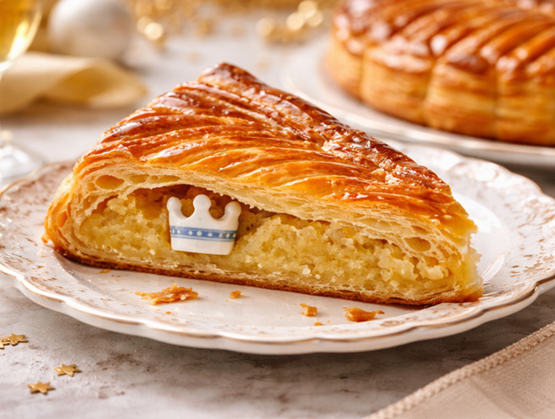
The ritual of the fève and the crown
Once the cake is cut, the youngest person traditionally sits under the table and calls out who should receive each slice so that nobody can see where the “fève” is hiding. Whoever finds it in their portion is crowned king or queen for the day and wears the cardboard crown that usually comes with the cake. The lucky winner is then expected to provide the next galette, ensuring the celebrations roll on through January.
The ritual matters so much that, according to one French survey, around 79% of people admit to “cheating” to make sure a particular guest, often a child, ends up with the fève. That playful manipulation underlines how the galette is less about strict religious observance and more about conviviality and sharing. Some French cities now present it publicly as a secular festival of good food and community, though this can spark debate about the cake’s Christian roots in the Epiphany story of the Three Kings or Wisemen.
Epiphany cakes across cultures
France is far from alone in baking a special cake for early January. Across Europe and in Latin America, Epiphany or “Three Kings’ Day” is marked by variations on the same theme: a shared sweet bread or cake hiding a bean or figurine, with symbolic luck for the finder.
In Spain and many Spanish-speaking countries, the traditional dessert is the roscón de reyes, a ring-shaped sweet bread often flavoured with orange blossom water and decorated with jewel-like candied fruits. It may be split and filled with whipped cream or custard. Inside, bakers tuck both a small figurine and a dried bean. The person who finds the figurine is crowned, while the one who bites into the bean is expected to buy the cake the following year.
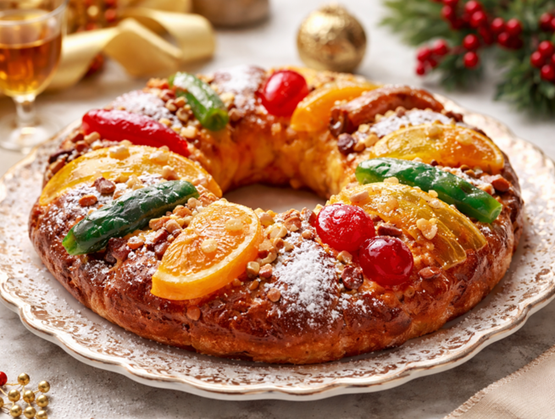
Portugal’s bolo rei is similar in shape, again resembling a crown, and studded with nuts and crystallised fruits. Greece’s Vasilopita, served on New Year’s Day or Epiphany, is usually a simple, fragrant cake or bread that conceals a coin, bringing good fortune to whoever discovers it in their slice.
In the United States, particularly in Louisiana and along the Gulf Coast, king cake is now most closely associated with Carnival and Mardi Gras. There, bakers use a brioche-style dough, often braided into a ring, glazed and sprinkled with coloured sugar, and sometimes filled with cream cheese, cinnamon or fruit. A tiny plastic baby figure hidden inside indicates who must host the next party or buy the next cake.
All of these cakes share a common thread. They arrive just as winter feels longest, invite people to gather around a table and turn the simple act of slicing dessert into a small ceremony of chance, generosity and shared laughter. In France, the galette des rois captures that spirit with particular flair, its crisp layers and almond-scented heart reminding everyone that, even after the holidays, there is still something to celebrate.
As January’s galettes remind people of how tradition and creativity coexist in French food culture, the year ahead promises further opportunities to explore that dynamic. SIAL Paris, held from 17 to 21 October, will welcome professionals from every corner of the food sector to discover the innovations shaping tomorrow’s tables.