
Reinventing French Classics in Paris

When visitors picture French cuisine, the mind often jumps to baguettes, camembert or a glass of Burgundy. Yet the country’s gastronomic heritage is far richer and more intricate than these postcard images. Dishes such as blanquette de veau, a slow-simmered veal stew cooked gently in a velvety white sauce, or boeuf bourguignon, where beef is braised for hours in red wine until the meat yields at the slightest touch, showcase the depth and patience historically associated with French cooking. Even sole meunière, a deceptively simple preparation of whole sole cooked in butter and lemon, reflects a mastery of balance and precision. These classics sit at the heart of a culinary tradition built on sauces, seasonal produce, deliberate pacing and a respect for craft.
What is striking today is how a number of Parisian chefs are returning to these foundations, not in nostalgia but as a springboard for reinvention. Their restaurants reinterpret the canon: lighter textures, cleaner flavours and discreet influences from abroad, all while maintaining the integrity of the original dish. Five places in particular exemplify this revival, offering a renewed appreciation for dishes that have shaped French dining culture.
Panurge and the return of the refined sauce
Panurge has become a quiet sensation in the Sentier neighbourhood, with chef Jason Gouzy working to restore the primacy of the classical French sauce. Their green-bean bundles, for instance, come cloaked in hollandaise, a warm emulsion of egg yolks and butter whisked until silky, transforming a simple vegetable into something almost luxuriant. Their courgettes à la Provençale reinterpret a rustic summer staple: the vegetables are stuffed with veal and topped with a bright pepper condiment, turning the dish into something delicately structured rather than purely traditional.
The restaurant’s vacherin, a dessert traditionally built from meringue and ice cream, is adapted to seasonal ingredients. In summer, its strawberry-rhubarb version is lifted with a marigold-leaf pesto that adds aroma without overpowering the fruit. The winter variation features mandarin with cardamom and bergamot cream. Even the “pressed guinea fowl” draws on classical French preparations of poultry cooked slowly under weight. Wrapped in thin vegetable layers and crowned with foie gras, it illustrates how Gouzy reworks familiar forms without undermining their origins. The result is a table that feels at once anchored and exploratory, respecting the craft while keeping traditions alive.
Le Savarin and the art of accessible tradition
Across the city, Le Savarin offers a more understated but equally convincing interpretation of the classics. Chef Takeshi Kimura presents dishes that are comforting without being heavy and technical without being showy. His pâté en croûte is a fine example: a mixture of meats encased in pastry, baked to achieve a crisp exterior and a tender, delicately seasoned interior. Kimura’s version is both refined and deeply familiar.
Another quintessential plate is his eggs en meurette, where eggs are gently poached in a Burgundy wine sauce enriched with shallots and mushrooms. Although often considered a rural dish, here it becomes an elegant starter. A slow-cooked lamb shoulder, deboned and rolled until supple, shows his commitment to craft. Even simple desserts, such as the vanilla flan, have a clarity that reflects the kitchen’s precise technique.
The restaurant’s appeal lies not only in its flavours but in its approachability. It offers a door into French tradition for diners who want rigour without formality, a quality that resonates in today’s dining landscape, where the food sector is searching for authenticity grounded in genuine know-how rather than theatrics.
Paulownia, Le Mouton Blanc and Brass: three visions of heritage
Chef Geoffrey Belin at Paulownia works in a space that straddles fine dining and bistro culture. His cuisine is resolutely seasonal, with ingredients treated separately to preserve their natural character. A dish of pollock with beurre blanc, a classic sauce of butter and white wine reduced to a glossy cream, comes with peas, turnips and green beans prepared individually. The effect is one of clarity, a modern tribute to the principles of classical cuisine. Even a simple fruit tart, layered with apples and apricots, calls back to the elegance of French pâtisserie while remaining anchored in the moment.
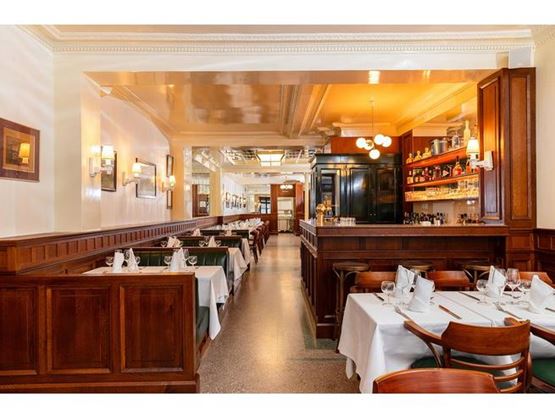
Meanwhile, in Saint-Germain-des-Prés, Brass brings brasserie culture into contemporary focus. Chef Amine Boudali honours staple dishes such as mussels with fries or navarin d’agneau, a spring lamb stew brightened with vegetables, while offering more refined preparations like beef seared on the plancha and finished in the oven before being served with pepper sauce. Desserts highlight a sense of theatre, including a flaming crème brûlée or brioche perdue with its crisp edges and soft centre. These are traditional pleasures delivered with a polished hand.
Paris has long been a lodestar for chefs and diners from around the world, including visitors drawn to events such as SIAL Paris, the international food trade show where global trends meet French expertise. Within the broader SIAL Off programme, the city unfolds as a curated cultural landscape in which gastronomy, shopping and museums sit side by side. Beyond restaurants, visitors can discover some of the inspiring boutiques, food shops, and museums that reveal the many layers of the French capital. These five tables are part of a larger journey, offering flavours that reinterpret heritage while illuminating the diversity and excitement of Paris. Taken together, they enrich the experiences that SIAL Paris and SIAL Off hope to encourage, opening the door to memorable outings and celebrations across the City of Light.
Image credits: Newtable, Tripadvisor