
WORLD BEE DAY: HOW BEE PRODUCTS ARE TRANSFORMING THE FUTURE OF FOOD

Today is World Bee Day, and this year it returns with a message that reaches far beyond the hive. Established by the United Nations and first observed in 2018, the day raises awareness of the role bees and other pollinators play in food, livelihoods and ecosystems. The date honours Anton Janša, the Slovenian pioneer of modern apiculture, born on 20 May 1734.
The 2026 theme, “Bee Together for People and the Planet”, places the long partnership between humans and bees at its centre. For the food industry, that partnership is not poetic background. It is commercial, agricultural and increasingly strategic. Bees support the production of fruits, nuts, seeds and crops that underpin nutrition and food diversity, while honey, propolis, royal jelly, pollen and beeswax continue to inspire new products across grocery, beverages, confectionery, bakery and functional foods.
Honey moves beyond the breakfast table
Honey remains the flagship product of apiculture, but its role is changing. Once treated mainly as a cupboard staple or tea sweetener, it is increasingly positioned as a premium ingredient, a flavour marker and a natural alternative to refined sugar. Monofloral honeys, regional origin claims, raw honey, creamed honey and honeycomb formats all speak to consumers looking for provenance and texture as much as sweetness.
Recent market figures suggest the category still has room to grow. Mordor Intelligence valued the global apiculture market at USD 10.11 billion (approximately €8.70 billion) in 2025, with forecasts suggesting it could reach USD 13.23 billion (€11.39 billion) by 2031. The same analysis points to rising demand for natural sweeteners, functional bee products and stronger traceability across supply chains.
The most visible honey trend, however, is not delicate or floral. It is hot. Spicy honey, often marketed as hot honey, has moved from pizzerias and fried chicken counters into snacks, sauces, crackers, cheeses, charcuterie boards and ready meals. Bakery and Snacks noted in May 2025 that hot honey was appearing in products ranging from chocolate and sausage rolls to pork rinds, reflecting the wider appetite for sweet heat combinations. The National Honey Board has also identified hot honey as part of a broader consumer shift towards complex flavour profiles that combine sweetness with spice, acidity or savoury depth.
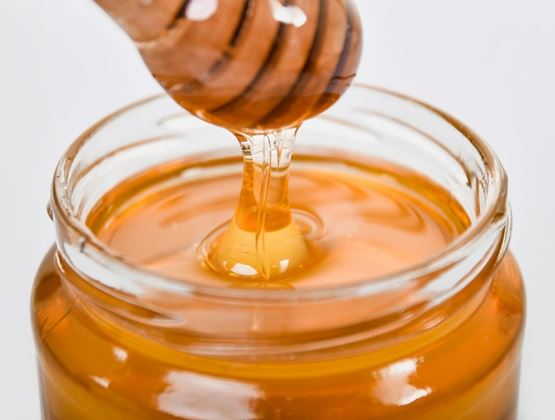
This “swicy” profile gives honey new versatility. It can glaze roasted carrots, coat fried chicken, finish pizza, lift goat’s cheese, sweeten chilli crisp, balance barbecue marinades or bring floral heat to cocktails and mocktails. For manufacturers, it offers a useful bridge between indulgence and naturalness: a recognisable ingredient with enough flavour energy to refresh mature categories.
From propolis to pollen: the functional hive
Beyond honey, bee products are gaining attention in categories shaped by wellness and functionality. Propolis, a resinous substance produced by bees, is appearing in lozenges, drinks, gummies and supplements, often associated with antioxidant and antimicrobial properties. Royal jelly is still present in premium health and beauty-adjacent food products, while bee pollen is used in smoothie bowls, granolas, snack formats and nutritional blends.
Bee pollen is particularly aligned with the visual language of modern wellness food. Its golden granules work as both ingredient and garnish, bringing colour, texture and a subtle floral bitterness to bowls, cereals, smoothies and bakery toppings. Recent market research from SkyQuest valued the global bee pollen market at USD 642.5 million (€553.0 million) in 2024 and projected it to reach USD 679.12 million (€584.5 million) in 2025, before rising to more than USD 1 billion (€860.6 million) by 2033.
For the food innovation exhibition landscape, this matters because bee products lend themselves to cross-category development. Honey can act as sweetener, flavour carrier, glaze, fermentation substrate or texture enhancer. Beeswax can appear in coatings or packaging discussions. Propolis can enter functional beverage pipelines. Mead, one of the oldest fermented drinks in human history, is also finding new audiences through craft positioning, lower-intervention fermentation and botanical blends.
Fermentation is one of the more interesting frontiers. Honey lends itself to mead, honey beer, kombucha-style drinks, shrubs, vinegar, fermented condiments and cocktail syrups. The ingredient’s natural complexity allows brands to play with acidity, botanicals, chilli, citrus, ginger, herbs and barrel ageing. In premium hospitality, honey is also moving into savoury menus through burnt honey butter, honey miso, honey mustard glazes, honey-based dressings and fermented honey garlic.
Distribution, fraud and the value of trust
World Bee Day also arrives at a difficult moment for the honey trade. Concerns around adulteration and cheap syrup substitution have pushed authenticity to the front of industry debate. The European Parliament noted in 2025 that half of honey samples taken from the European market were suspected of non-compliance with EU honey rules, underlining the pressure on regulators, importers and retailers to protect both consumers and beekeepers.
The issue cuts across distribution. In supermarkets, honey often sits between commodity pricing and premium storytelling. Online, direct-to-consumer beekeepers can highlight apiary location, floral source and seasonal variation. In foodservice, chefs are using honey as a marker of terroir, pairing darker, more robust honeys with cheeses, marinades, sauces and desserts. In specialist retail, honey tasting is beginning to resemble olive oil or chocolate education, with colour, aroma, crystallisation and botanical origin treated as points of discovery.
Premiumisation is also changing formats. Squeeze bottles remain practical for everyday use, but gifting jars, honey flights, honeycomb squares, infused honeys and single-origin sets are making the category more experiential. Lavender honey, acacia honey, chestnut honey, buckwheat honey and forest honey each offer different flavour cues, from delicate and pale to dark, resinous and almost bitter. For consumers used to single-origin chocolate and estate olive oil, honey is beginning to speak the same language.
This shift may benefit smaller producers able to tell a precise story, but it also places pressure on supply chains to prove what they say. QR codes, batch tracking, pollen analysis, blockchain-backed traceability and closer partnerships between packers and beekeepers are all part of the emerging toolbox. The question is no longer whether honey is natural. It is whether its route from hive to shelf is legible.
Pollinators as a food industry issue
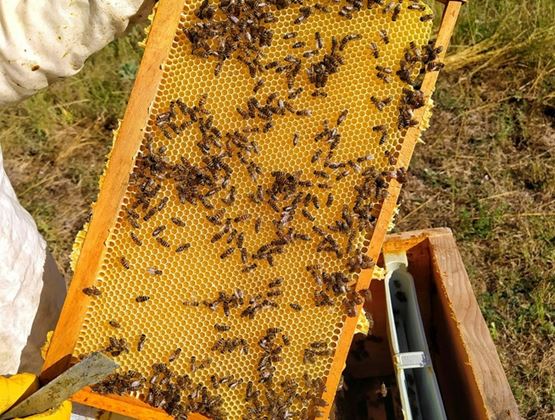
The wider significance of World Bee Day lies in reminding the industry that bees are not only suppliers of honey. They are part of the infrastructure of food production. FAO emphasises that bees and other pollinators contribute to food security, nutrition, biodiversity and agricultural livelihoods, while the 2026 theme highlights traditional knowledge, modern technologies and sustainable beekeeping as part of agrifood systems transformation.
Climate variability, pesticide exposure, habitat loss and colony health all affect supply. They also connect honey to regenerative agriculture, biodiversity metrics, sustainable sourcing and rural resilience. For brands, this creates both responsibility and opportunity. Bee-friendly sourcing programmes, pollinator habitats around production sites, partnerships with local beekeepers and support for women and young people in apiculture can move the conversation from seasonal awareness to long-term value creation.
SIAL Paris 2026, taking place from 17 to 21 October, will bring together producers, distributors, restaurateurs and importers-exporters around the latest trends and innovations in the aisles. As a food industry trade show and global hub for innovation, it offers a natural platform for these questions: how natural sweeteners evolve, how traceability can rebuild trust, how functional ingredients are responsibly positioned, and how biodiversity becomes a practical concern for brands across categories.
On World Bee Day, the message is simple: without pollinators, the future of food loses flavour, diversity and resilience.
Photo credits:
Photo by Ankith Choudhary for Unsplash
Adonyi Gábor for Pexels
Taha Berk Tekin for Unsplash