
FOOTBALL’S GLOBAL MENU

The World Cup has always been about flags, shirts and noise… and of course what’s happening on the pitch. In 2026, the appetite around the tournament is part of the wider spectacle. With 48 teams, 104 matches and 16 host cities across Canada, Mexico and the United States, the tournament has become a roaming table for international food culture. Its scale is already visible in the viewing and visitor economy around the competition, with fans from around the world enjoying North American food culture before, during and after the game. Every supporter brings hunger, habit and identity into the stadium economy.
Match-day eating is rarely delicate. It is portable, loud, salty, sauced and designed for one hand while the other clutches a flag. Sports catering is no longer a secondary service. The global sports event catering services market was valued at $18.4 billion in 2025 and is projected to reach $28.9 billion by 2034. Around major tournaments, food becomes part of the fan experience, the visitor economy and the brand theatre surrounding the pitch.
Eight flags, eight cravings
Mexico may offer the purest expression of this. Around the Azteca in Mexico City, and fan zones, tacos al pastor, birria, tamales, esquites and micheladas are not decorative “local flavour”. They are the rhythm of football hospitality. In Mexico City, where public fan zones have been set up alongside cultural activities, the city’s street food scene has become part of how visitors experience the tournament.
Brazil brings a different match-day energy. Outside the Maracanã and in Brazilian fan gatherings abroad, coxinhas, pão de queijo and espetinhos carry the same mix of comfort and movement as the football itself. Cheese, cassava, chicken, grilled meat and cold drinks make a stadium cuisine built for queues, pavement and celebration.
Japan shows how stadium food can be both popular and precise. J.League grounds are known for “stadium gourmet”, with clubs such as Gamba Osaka listing ekiben, drinks and local vendors as part of the match-day experience. Yakisoba, gyoza, karaage and bento-style meals turn the concourse into a regional showcase rather than a generic snack counter.
In the United States, match-day food leans into abundance, speed and familiarity: hot dogs, nachos, popcorn, soft pretzels, burgers, wings, fries and barbecue sandwiches, with the stadium acting as both concession stand and regional showcase. These are foods built for scale and movement, easy to serve, easy to customise and closely tied to the country’s wider sports culture.
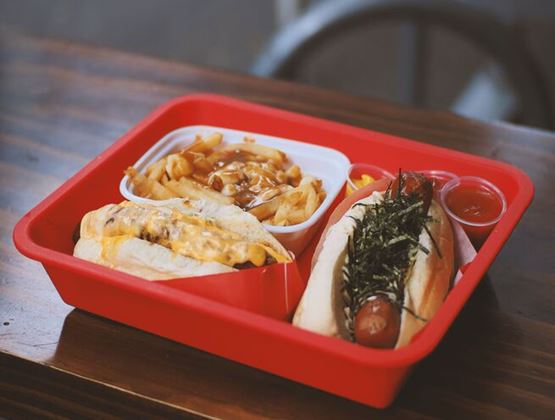
A similar logic crosses the border into Canada, where North American stadium staples sit alongside a dish with a stronger national signature: poutine. Fries, cheese curds and gravy offer edible warmth in a country where sport and winter memory often overlap. For World Cup visitors, it is a simple product with a strong identity, easy to adapt into premium, vegetarian or loaded formats.
South Africa’s football food culture brings braai energy to the fore. Boerewors rolls, grilled meat, chakalaka and maize-based sides sit close to the country’s wider outdoor food culture. In tournament settings, they offer a lesson for the food sector: authenticity travels best when the format is simple, recognisable and generous.
Morocco, meanwhile, carries the pull of grilled brochettes, spiced sandwiches, msemen and mint tea. The country’s supporters have brought colour and energy to the tournament’s stands and fan zones, and the country’s food culture gives operators a model for fragrance, spice and speed without losing craft.
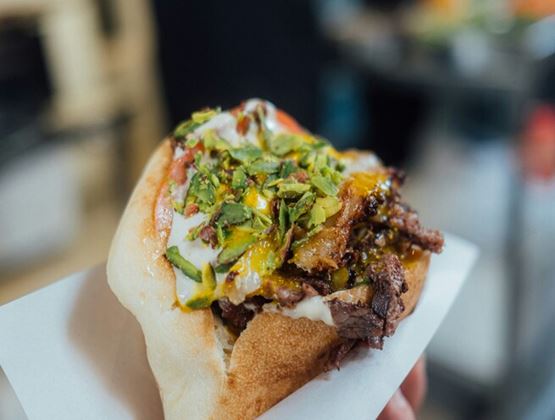
At football games in France, food is rarely the main event during the match itself. Eyes stay on the pitch. The appetite gathers earlier, in bars, on pavements and around food trucks near the stadium. Before kick-off, fans meet over jambon-beurre baguette sandwiches, kebabs, merguez-frites, saucisses de Strasbourg in a baguette or the French version of the hot dog. It is less about eating through the game than extending the ritual before it begins.
From fan food to product strategy
The World Cup also shows how national dishes become commercial formats. Tacos become kits, sauces and frozen snacks. Yakisoba becomes a ready meal. Poutine becomes a loaded fries concept. Pão de queijo becomes gluten-free bakery innovation. Boerewors becomes a premium sausage line. Moroccan spices move into marinades, dips and street-food concepts.
For grocery buyers, hospitality groups and manufacturers, the tournament is a live map of emotional demand. Fans do not eat only because they are hungry. They eat to belong. A dish becomes a shortcut to place, memory and tribe. That makes major sport a useful testing ground for the food industry sectors most exposed to convenience, world cuisine, snacking, sauces, frozen food and foodservice.
A World Cup for food innovation
The smartest operators are not simply adding international dishes to menus. They are reading the codes behind them: portability, theatre, heat, freshness, sharing, speed and story.
As the World Cup moves towards its final stages, another competition is unfolding around it. It is fought between grills, fryers, carts, bowls and boxes. The winners are not necessarily the most refined products, but those that travel well, taste immediate and feel rooted in a culture.
That is where the World Cup of food connects naturally with Sial Paris. The tournament reveals what global consumers already understand: food innovation is not only born in laboratories or boardrooms. It also begins in the stands, in fan zones, on pavements and in the hands of people eating together before the whistle blows.
Image credits:
Jonah Heath - Pexels
Yoad Shejtman - Unsplash