
SEA BREAM, PLANTAIN AND MEDITERRANEAN INSPIRATION

SIAL Off has always been a way of reading Paris through its food addresses, from restaurants and bakeries to places where craft and pleasure meet. For 2026, the concept is also moving into the kitchen, with recipes from the SIAL Paris team offering a more personal look at the tastes, memories and influences behind the event. Maeva’s braised sea bream, plantain and spicy tomato sauce sits perfectly in this spirit. It is generous, direct and sunlit: a whole fish, aromatic marinade, sweet plantain and a tomato sauce sharpened with chilli peppers.
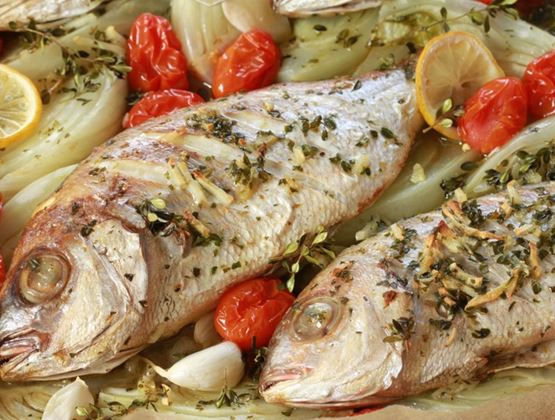
The sea bream carries a particular Mediterranean elegance. It is one of those fish that works well on a grill, in an oven dish, with lemon, olive oil, garlic, herbs or tomato. Maeva’s version refuses to limit itself to a single culinary identity. The plantain brings West African and Caribbean warmth, the ginger adds depth, and the chilli tomato sauce pulls the dish towards comfort food.
A fish with deep Mediterranean roots
Sea bream is strongly associated with the Mediterranean, both through fishing traditions and aquaculture. In European markets, it is often sold whole, which suits recipes built around roasting, grilling or braising. Its flesh is white, delicate and firm enough to hold together under heat, while the skin crisps beautifully when brushed with oil and spices.
The species also has a strong presence in European consumption. EUMOFA’s 2025 species profile identifies gilthead sea bream as the 15th most consumed species in the EU, with apparent consumption of 0.33kg live weight equivalent per capita in 2023. Nutritionally, EUMOFA lists fresh gilthead sea bream fillet at 128 kcal per 100g, with 20.8g of protein and 4.8g of lipids, alongside omega 3 fatty acids.
That balance partly explains why sea bream has remained so popular in restaurants and home cooking. It is light but not thin, refined but not fragile. It can be cooked in a simple Mediterranean style, but also stands up to stronger marinades like Maeva’s mixture of garlic, onion, ginger, paprika and lemon. The result is a fish that works as a centrepiece without feeling heavy.
Frozen fish and the sea bream market
The frozen fish market gives the dish another industry angle. Frozen seafood is not simply a convenience format; it is a major part of the European supply chain. Sea bream, however, remains a largely fresh product in Europe. EUMOFA notes that there is no significant processing activity for gilthead sea bream, as the species is mainly consumed fresh. Trade data confirms this preference. In 2024, extra-EU imports of gilthead sea bream reached 44,871 tonnes, of which 42,964 tonnes were fresh or chilled and only 1,907 tonnes were frozen. For restaurants, retailers and the wider food sector, this makes sea bream an interesting case: in a seafood market where frozen is strategically important, its identity remains tied to freshness, whole-fish presentation and Mediterranean cooking rituals.
A plate between sea, spice and sweetness
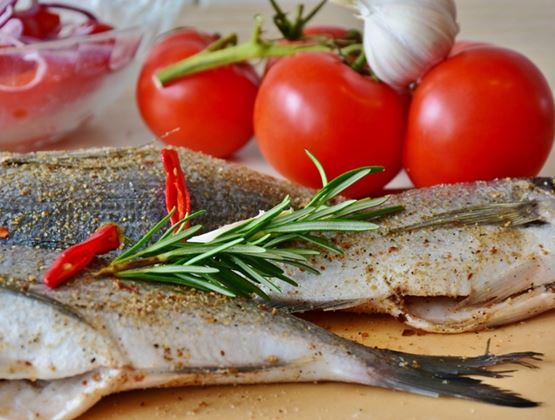
Maeva’s dish starts with a whole sea bream, cleaned and scored so the marinade can enter the flesh. Garlic, onion, ginger, paprika, lemon juice, salt and pepper are blended into a fragrant paste, then rubbed over the fish with a bay leaf leaving it to marinate. The method is simple, but it respects what makes whole fish cooking so satisfying: the marinade gives flavour to the skin, the flesh steams gently around the bones, and the final plate arrives with shape and generosity.
The plantain changes the rhythm of the recipe. Ripe plantains, fried until golden, bring caramelised edges and soft sweetness. Against the sea bream’s mild flesh, they add weight and comfort. The tomato sauce, made with blended tomato, onion and chilli, then simmered with tomato concentrate, ties the plate together. It is bright, hot and slightly thickened, the kind of sauce that asks for a forkful of fish and a piece of plantain at the same time.
In Mediterranean cooking, sea bream is often associated with restraint: lemon, herbs, olive oil, perhaps fennel or potatoes. Maeva’s version keeps the fish but turns up the volume. It shows how Mediterranean ingredients travel, adapt and meet other traditions. The dish could sit in a Paris restaurant, a family kitchen or a seaside table. That is exactly why it feels right for SIAL Off: it speaks of place, but refuses categorisation.
Maeva’s recipe: braised sea bream, plantain and spicy tomato sauce
Total time: 1 hour. Serves 2 to 3 people.
Ingredients: one whole sea bream, garlic, onion, lemon, ginger, paprika, tomatoes, chilli, tomato concentrate, ripe plantains, oil, salt, pepper and one bay leaf.
Step 1. Prepare the sea bream. Clean the fish and make a few cuts in the flesh. Blend the garlic, onion, ginger, paprika, lemon juice, salt and pepper. Coat the sea bream with the marinade, add the bay leaf and leave to marinate for at least 30 minutes.
Step 2. Cook the sea bream. Bake at 200°C for 25 to 30 minutes, or cook in a pan or on a grill until the fish is nicely browned and cooked through.
Step 3. Prepare the plantains. Peel the ripe plantains and cut them into half-moons. Fry them in hot oil until golden, then drain and season very lightly with salt.
Step 4. Prepare the spicy tomato sauce. Blend the tomatoes, onion and chilli. Heat a little oil in a pan, add the blended mixture and the tomato concentrate, then simmer for 10 to 15 minutes. Season and adjust the texture if necessary.
In Paris, similar flavours can be explored at Villa Maasai, 34 avenue Pierre Mendès-France, Paris 13, and African Lounge, 2 rue La Pérouse, 75016 Paris.
In the run-up to SIAL Paris 2026, recipes like Maeva’s show how the city’s tables continue to connect homes, markets, restaurants and global food industry sectors.
Image credits:
Rita-und-mit from Pixabay
Katharina Klinski from Pixabay
Rita-und-mit from Pixabay