
FOOD INTELLIGENCE IN ACTION: DATA, AI AND THE TRANSFORMATION OF THE SECTOR

The transformation of the global food system is increasingly driven by data. Across production, distribution and retail, digital tools are redefining how value is created, captured and measured. From blockchain-enabled traceability to AI-driven pricing and retail intelligence platforms, the traditional linear supply chain is evolving into a complex, interconnected network. This shift is not only technological but structural, influencing how companies operate, collaborate and compete within the food sector.
From traceability to trust: blockchain in the food chain
Traceability has long been a cornerstone of food safety, but digital technologies are pushing it into new territory. Blockchain, in particular, is being deployed to create immutable records of product journeys, from farm inputs to retail shelves. Major retailers and food manufacturers are investing in these systems to enhance transparency and respond to consumer demand for verifiable sourcing.
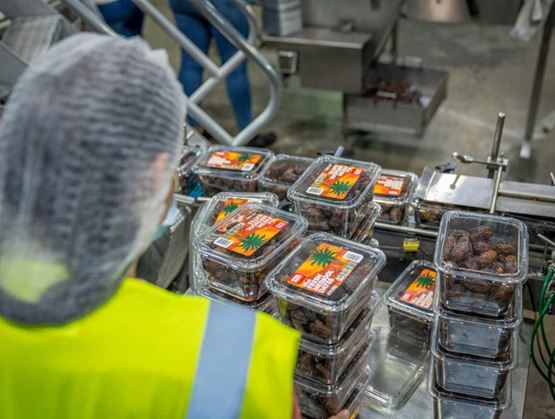
Recent data from IBM Food Trust indicates that blockchain-enabled traceability can reduce the time required to trace a food product from days to seconds, significantly improving recall efficiency and risk management. In parallel, a 2024 report by MarketsandMarkets estimated that the global blockchain in agriculture and food supply chain market would reach approximately USD 1.5 billion by 2026, reflecting growing adoption across both developed and emerging markets.
Beyond compliance, traceability is becoming a commercial differentiator. Products with verified provenance, whether organic, fair trade or geographically protected, increasingly command premium positioning. The integration of blockchain with IoT sensors and real-time data feeds is also enabling continuous monitoring of temperature, humidity and logistics conditions, reinforcing quality assurance across the supply chain.
AI and retail intelligence: from forecasting to pricing
Artificial intelligence is reshaping retail operations at multiple levels, from demand forecasting to dynamic pricing. Retail intelligence platforms now aggregate vast volumes of data, including sales patterns, weather conditions, local events and consumer behaviour, to optimise inventory and pricing strategies in real time.
According to a 2025 McKinsey analysis, AI-driven demand forecasting can reduce forecasting errors by up to 50 percent and lower inventory costs by 10 to 20 percent. This level of precision is particularly valuable in the food sector, where perishability and margin pressures require constant adjustment.
AI pricing tools are also gaining traction. These systems analyse competitor pricing, elasticity models and consumer purchasing behaviour to adjust prices dynamically. In grocery retail, where margins are often tight, even small improvements in pricing efficiency can have significant financial impact. A 2024 Deloitte study found that retailers using AI-based pricing saw margin improvements of between 2 and 5 percent.
Retail intelligence extends beyond pricing. Shelf analytics, powered by computer vision, can monitor product availability and placement in stores, while e-commerce platforms use recommendation engines to personalise consumer journeys. Together, these tools are transforming retail from a reactive model into a predictive and adaptive system.
Platforms and disintermediation: reconfiguring distribution
The rise of digital platforms is fundamentally altering distribution models. Food delivery apps, e-commerce marketplaces and white-label platforms are enabling brands to reach consumers directly, reducing reliance on traditional intermediaries. This trend, often described as disintermediation, is reshaping the balance of power within the food value chain.
This shift is seen in the growth of delivery ecosystems. Global online food delivery revenue is projected to exceed USD 1 trillion by 2030, driven by continued consumer adoption of app-based ordering. Within this ecosystem, platforms act not only as distribution channels but also as data hubs, capturing detailed insights into consumer preferences and purchasing behaviour.
At the same time, disintermediation is not absolute. New intermediaries are emerging in the form of technology providers, logistics platforms and data analytics firms. Rather than eliminating intermediaries, the ecosystem is becoming more layered, with value shifting towards those who control data and customer relationships.
Data as infrastructure: towards a new value chain
Across these developments, data is emerging as the central infrastructure of the food industry. It connects production systems, logistics networks, retail environments and consumer interfaces into a continuous feedback loop. This integration enables faster decision-making, more precise targeting and greater operational efficiency.
However, it also raises new challenges. Data interoperability, cybersecurity and regulatory compliance are becoming critical concerns, particularly as companies operate across multiple jurisdictions. The European Union’s evolving regulatory framework around data governance and digital markets is likely to influence how these systems develop in the coming years.
For food businesses, the implications are strategic. Investment in digital capabilities has become essential for competitiveness. Companies must not only adopt new technologies but also develop the organisational structures and skills required to leverage them effectively. Partnerships with technology providers, startups and research institutions are becoming increasingly common as firms seek to navigate this complex landscape.
This transformation also affects smaller players. While large corporations often lead in technology adoption, cloud-based platforms and software-as-a-service models are lowering barriers to entry, enabling SMEs to access advanced tools without significant upfront investment. This democratisation of technology is reshaping competition across the sector.
A new agenda for industry dialogue
As technology, data and platforms continue to redefine the rules of the game, industry dialogue is evolving accordingly. The questions facing food professionals today extend beyond product innovation to encompass data governance, digital ecosystems and the future of value creation.
This shift will be at the heart of discussions during the upcoming edition of Sial Paris, particularly within the SIAL Summits programme. Building on the 2024 launch, which introduced a more immersive and collaborative conference format, SIAL Summits will return once again in October. One of the highlights will be the summit “Food Intelligence: The New Value Chain”, exploring how technology, data, platforms and AI are reshaping the agri-food industry.

By bringing together industry experts, SIAL Summits aim to explore not only current applications but also the structural changes shaping the future of the food innovation exhibition landscape. In doing so, they provide a space for stakeholders to examine how digital transformation is redefining roles, relationships and opportunities across the global food system.
In an environment where value is increasingly determined by information rather than volume alone, understanding these dynamics is becoming essential. The convergence of technology and food is becoming a defining feature of the sector’s evolution, one that will continue to shape conversations, strategies and innovations at SIAL Paris and beyond.
Image credits:
Mark Stbnicki - Pexels
Magda Ehlers - Pexels