
FOODSERVICE TRENDS TO WATCH

Every two years, SIAL Insights brings together the expertise of Kantar, ProtéinesXTC and Circana to analyse the major transformations shaping food worldwide. The 2026 edition highlights ten key trends, ranging from personalised health and new trade-offs between quality and price to changing meal habits, plant-based food, snacking and digital purchasing journeys.
As a partner in the study, Circana contributes its expertise in consumer markets and foodservice, drawing on consumer panels and data dedicated to the out-of-home sector. These insights provide a detailed view of changing behaviours, new consumption occasions, the growth of snacking and the impact of budget pressures on consumer choices.

Among the experts who contributed to this edition is Maria Bertoch, Director New Business Development & Foodservice Expert at Circana. With more than 15 years of experience in out-of-home foodservice in France and internationally, including across European, US and Australian markets, she brings valuable insight into the changes currently reshaping the sector. The SIAL Paris Newsroom spoke with her to explore the key findings from SIAL Insights 2026 and the developments to watch across foodservice.
How has Circana supported SIAL in developing and analysing the trends presented in the latest SIAL Insights report?
Circana provides essential data across all consumer channels, covering both retail and foodservice.
This dual expertise makes it possible to examine the interactions between retail and foodservice and understand how trends emerge, move between channels and develop from one environment to another.
Beyond the French market, Circana provides comparable data across 12 countries worldwide. This international coverage offers a unique perspective on global consumer trends and helps identify more quickly the developments that are likely to shape the markets of tomorrow.
For SIAL stakeholders, this data is a valuable tool for better understanding consumer expectations, tracking market dynamics and anticipating growth opportunities in strategic sectors such as food, retail and foodservice.
What are the main trends or changes you are currently seeing in the out-of-home foodservice sector?
2025 was a relatively difficult year for the foodservice sector, and 2026 remains full of challenges. Geopolitical tensions and supply chain disruptions have contributed to rising raw material costs, fuelling persistent inflation in many countries.
This inflation has a direct impact on consumer behaviour. When household budgets come under pressure, spending on eating out is often one of the first areas to be cut back. Across most of the markets we monitor, we are therefore seeing a slight decline in overall visits to foodservice establishments.
Against this backdrop, quick-service restaurants continue to gain ground. They are increasingly well aligned with consumers’ expectations around speed, convenience, affordability and variety. Operators have also significantly improved the quality of the products they offer, making the sector more attractive to a broad range of consumers.
By contrast, full-service restaurants are facing greater difficulties. They are recording sharper declines in visits and are particularly affected by reduced spending among consumer groups that are more vulnerable to economic pressures, including families and young adults.
In an uncertain economic environment, foodservice professionals therefore need to strike the right balance between price control, quality, innovation and customer experience in order to continue attracting consumers whose budgets remain more constrained than in the past.
Which cuisines or culinary influences are currently gaining ground in out-of-home foodservice?
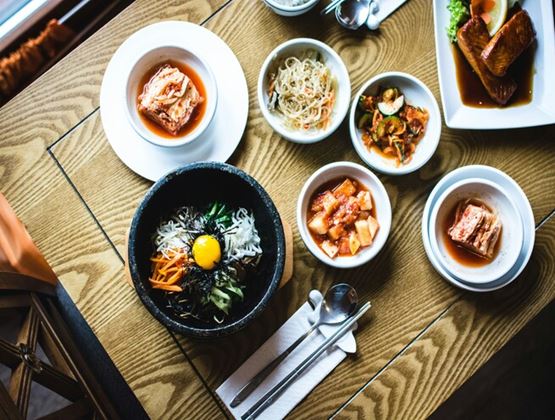
We are seeing strong interest in world cuisines, which allow consumers to travel through food. Asian flavours, and Korean cuisine in particular, continue to grow in popularity. Spices, distinctive sauces and unexpected flavour combinations are becoming increasingly common on menus.
How are expectations around convenience influencing the foodservice offer?
Convenience is now one of the main drivers of food innovation and is influencing product formats across both retail and foodservice.
This trend can be seen particularly in the growth of portable formats designed to be eaten easily on the go. Onigiri is a particularly good example. This Japanese rice triangle, which was still relatively unfamiliar in France a few years ago, can now be found both in foodservice outlets and on retail shelves.
The dessert market is also being strongly influenced by the demand for convenience. Consumers are increasingly turning towards products inspired by American-style bakeries, such as cookies, muffins and doughnuts. Easy to take away, share or eat on the go, these formats fit well with changing lifestyles and are gradually competing with more traditional desserts.
Convenience is also increasingly linked to better product preservation. Consumers are looking for products that can retain their taste and nutritional qualities for several hours without requiring particular storage conditions. The success of certain drinkable products, such as on-the-go yoghurts, illustrates this shift particularly well. Being easy to transport and consume away from home while maintaining product quality has become a real competitive advantage.
More broadly, this trend reflects the evolution of contemporary lifestyles. Consumers expect products that fit easily into their daily routines without compromising on taste, quality or the overall eating experience. For food manufacturers and foodservice operators alike, convenience is no longer simply a product feature, but a real driver of innovation and growth.