
HEALTH AND NATURALITY: CLEAN LABEL AND ALTERNATIVE PROTEINS EMERGE AS GLOBAL FOOD STANDARDS

Food markets are speaking different languages, but the message is increasingly similar. Consumers want ingredients they understand, products that feel closer to nature, fewer additives, more plant-based options and stronger proof of origin. For manufacturers, importers and distributors, this is no longer simply a wellness trend. It is becoming a condition of market access.
SIAL Insights 2024 captured the pressure point clearly: 74% of people believe their diet may present a health risk, a figure rising particularly in the United States and Europe. At the same time, alternative proteins are moving into a more industrial phase. Market Data Forecast valued the global plant-based protein market at USD 27.48 billion in 2025, approximately €25.3 billion, with forecasts pointing to USD 90.06 billion by 2034, around €82.9 billion. Clean label ingredients are following a similar path, with Mordor Intelligence estimating the market at USD 48.23 billion in 2025, around €44.4 billion, and projecting USD 70.36 billion by 2031, around €64.8 billion.
From the Gulf to North America, clean label becomes commercial language
In the Arabian Gulf, the natural trend is advancing alongside foodservice growth. The GCC foodservice market is projected to rise from USD 31.80 billion in 2022, around €29.3 billion, to USD 62.25 billion by 2030, around €57.3 billion, according to Fortune Business Insights. Urbanisation, tourism and rising purchasing power are expanding the market, but the quality of demand is changing too. Natural colours, less sugar, organic positioning and transparent labels are becoming part of the competitive offer, especially for imported products.
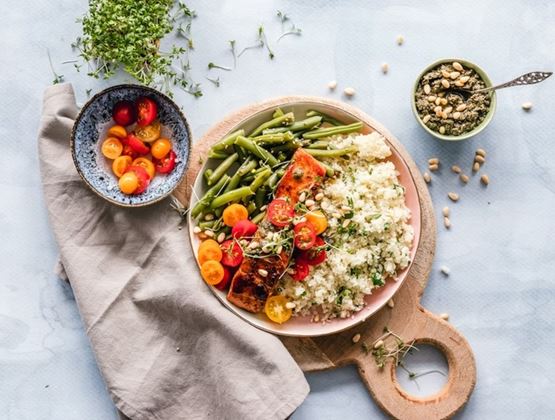
A similar expectation is visible in Canada, where the 2025 food conversation is turning back towards simple meals, home cooking, minimally processed ingredients and functional hydration. The appeal lies in comfort, but also in control. Consumers want healthier products without losing practicality, pushing companies to combine short ingredient lists with convenient formats.
Australia adds another dimension. Its agrifood sector is built on strict sanitary standards, traceability and export credibility, while domestic consumers are showing rising interest in organic, local and sustainable products. In markets such as Australia, clean labels do not stand alone. It becomes part of a wider trust package that includes origin, process, packaging and proof.
Europe’s plant-based transition matures
Europe remains one of the most advanced laboratories for plant-forward innovation. Germany continues to carry particular weight. In 2025, Germany’s agriculture ministry reported that almost one in ten people in the country identified as vegan or vegetarian, while 37% described themselves as flexitarian. This matters because flexitarians are often the real growth engine: they do not necessarily abandon meat, but they create recurring demand for alternatives that taste good, cook easily and fit everyday routines.
Italy is approaching the same transition through diversification rather than rupture. A strong domestic food culture has not prevented growth in meat substitutes, plant-based products, ready meals and e-commerce grocery. For foreign companies, the opportunity lies in balancing innovation with Italian expectations around quality, pleasure and culinary credibility.
In Sweden, the picture is more nuanced. Organic products have faced pressure in supermarkets, but the broader agenda around health, sustainability and traceability remains resilient. The KRAV label and a strong B2B ecosystem continue to support a market where proof matters. Denmark, meanwhile, is turning plant-based strategy into policy. The country has set a target to cut greenhouse gas emissions by 70% by 2030 and has developed a national action plan for plant-based foods, linking alternative proteins, public funding and food innovation to climate objectives.
The Netherlands adds the technological layer that increasingly connects all these regions. Sustainable products, packaging innovation, food waste reduction, blockchain, IoT, food safety and transparency are becoming part of the same value equation. Health is not only about formulation. It is also about data, supply chains and consumer confidence.
The Americas connect health, origin and everyday convenience
In Mexico, health positioning is increasingly tied to premiumisation. Gourmet consumers are paying closer attention to local and ethical ingredients, responsible production, sustainable packaging and reduced waste. Labels such as organic, gluten-free, low sugar and high protein are becoming more familiar, especially among higher-income consumers purchasing imported products. Plant-based meat and dairy alternatives are also gaining ground, helped by a broader search for transparency and modernity in the shopping basket.
The Mexican context has an additional business dimension in 2026, with the bicentenary of France-Mexico bilateral relations expected to bring cultural and gastronomic events in both countries. Retailers including Palacio de Hierro and Chedraui are planning France-focused festivals, creating potential visibility for French food companies and premium grocery brands.
Chile’s health shift is more closely linked to pulses, plant proteins and prepared formats. Demand for frozen foods and ready meals is rising among foodservice operators and time-poor consumers, while legumes sit at the intersection of affordability, nutrition and sustainability. In the United States, the scale is different again. Organic, healthy and traceable products continue to offer opportunities, with Pennsylvania standing out as a strategic agrifood hub thanks to its processing base, logistics assets and access to large consumer markets.
Asia-Pacific and Africa widen the wellness map
Thailand is positioning itself around future-facing food. Functional, organic and alternative products are expected to remain central to its agrifood growth in 2026, supported by halal certification, seafood exports, functional food development and digital foodservice channels. The country’s ambition is not only to serve domestic demand but to build export credibility in foods that combine health, convenience and certification.
Vietnam reflects another version of this transition. Ready-to-consume, organic and healthier products are progressing as modern retail and e-commerce gain ground over traditional channels. The key question for brands is how to adapt global wellness codes to local price points and shopping habits.
South Africa, meanwhile, is seeing growth in niche markets including vegan, gluten-free, halal, kosher and sugar-free beverages. This sits alongside strong agricultural exports, from citrus and grapes to apples and wine. The result is a market where wellness can develop both through local agricultural strength and imported speciality products.
For a food industry trade show, this creates a sharper role. Buyers are not only looking for products, but for credible answers to questions on naturality, nutrition, carbon, origin, certification and scalability. SIAL Paris already reflects this direction through its organic and wellness sector, where the SIAL FOR CHANGE Awards have highlighted fortified functional foods, fermentation-based products and premium plant-based formulations. As the next food innovation exhibition approaches, SIAL Paris will bring these regional signals into one commercial arena, showing how health, naturality and alternative proteins are becoming a shared grammar for the global food industry.