
SCALING FRENCH TASTE FOR GLOBAL MARKETS

France’s agri-food industry remains one of the most influential in Europe, yet the export environment has become more complex. In 2024, French exports of agricultural and agri-food products reached €82.1 billion, only marginally higher than the previous year, while the trade surplus narrowed to €4.9 billion. The European Union accounted for 58.2% of exports, confirming that nearby markets continue to dominate trade flows even as companies pursue opportunities further afield. France also remains the leading agricultural producer in the EU, representing 18% of total production value.
These figures underline a paradox. France retains strong industrial capacity, global recognition and a diverse product portfolio, yet the pace of export growth is slower than in some competing countries. Italy, for example, has gained visibility in several international markets in recent years. For French producers, the issue is therefore not simply maintaining presence abroad, but strengthening competitiveness and accelerating international development.
Export is becoming a structural necessity
For many food companies, export expansion is increasingly tied to long term resilience. Domestic demand in mature markets has stabilised, and population growth in Europe remains modest. Expanding internationally allows producers to diversify revenue streams, optimise industrial capacity and distribute risk across several markets.
Internationalisation has increasingly become essential for sustaining growth and maintaining France’s position in global trade. France is currently the world’s sixth largest exporter of agricultural and agri-food products, but competition has intensified as other countries invest heavily in branding, innovation and international distribution.
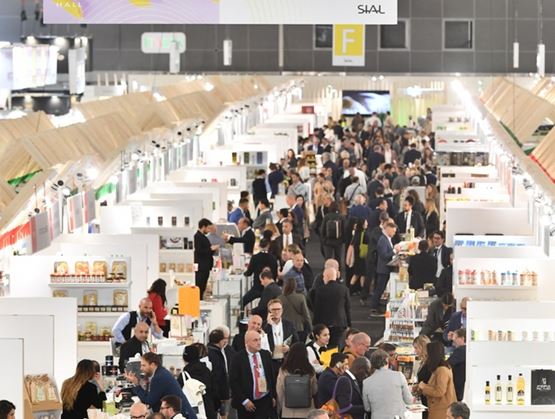
Events that bring together global buyers and producers continue to play an important role in this process. SIAL Paris remains one of the largest gatherings of the international food industry, bringing together thousands of companies and buyers from around the world. For exporters, such platforms provide opportunities to test products, build distribution networks and identify emerging market demand within the global food sector.
Three companies, three paths to international markets
Concrete examples of SIAL Paris exhibitors illustrate how different segments of the French agri-food industry approach export development.
Fromageries Paul Dischamp, founded in 1911, specialises in the production and maturation of cheeses from the Auvergne region. The company works with several protected designation cheeses including Saint-Nectaire and Cantal. In recent years, it has expanded its international footprint while preserving the traditional identity of its products. Exports represented around 10% of the company’s turnover in 2025, with distribution across five continents. Its strategy combines strong regional positioning with adaptation to local markets, including packaging formats and partnerships suited to international distribution.
Recognition has accompanied this growth. In 2026 the French food industry association ANIA and consulting firm EY awarded Fromageries Paul Dischamp both the Jury Prize and the Export Prize, highlighting its ability to translate regional expertise into global commercial success. The company’s trajectory illustrates how traditional products can find new markets when supported by targeted export strategies.
A very different approach can be seen in Re.Snack, a Dijon based start-up that operates in the confectionery sector. The company emerged from an event catering activity built around candy floss before developing a patented sugar substitute and launching the Nuage brand.
Momentum accelerated following SIAL 2024, where Nuage was recognised in the sweet grocery category. Distribution expanded rapidly through major retailers including Carrefour, and production volumes increased significantly. The company’s output grew from around 5,000 packages per month before the exhibition to roughly 70,000 per week one year later. Over the same period turnover rose from €200,000 to €2 million.
Although still at an early stage internationally, Re.Snack has already begun building export markets in Belgium and Switzerland. The company aims to increase the share of international sales to around 10% by early 2027, focusing particularly on neighbouring European markets such as Benelux, Spain and Italy. Its product pipeline continues to expand, including sugar-free and oil-free popcorn, demonstrating how innovation driven brands can integrate export ambitions from the outset.
A third example highlights the strength of heritage brands when combined with structured international distribution. Biscuiterie La Mère Poulard was created in 1995 as an extension of the historic Mont-Saint-Michel hospitality brand, producing biscuits such as galettes and cookies.

Over time the biscuit activity has grown into a substantial export business. By 2025 the company generated around €30 million in revenue and exported products to more than 60 countries worldwide. Production is based in Brittany and certified to international food safety standards, allowing the company to access a wide range of global markets.
The brand’s success reflects the enduring international appeal of French culinary heritage, but also the importance of industrial scale and logistics. Heritage alone does not guarantee export performance. Effective distribution networks, modern production facilities and clear brand positioning remain essential.
Visibility and conversion in the global marketplace
Despite the growth of digital commerce and online sourcing platforms, physical industry gatherings still play a decisive role in international food trade. Buyers frequently emphasise the need to taste products, evaluate quality and build relationships with suppliers before entering distribution agreements.
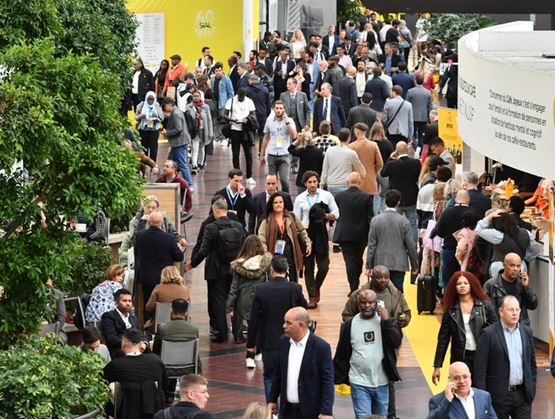
The 2024 edition of SIAL Paris welcomed visitors from nearly 200 countries and more than 100 official delegations, illustrating the global reach of the event. Such gatherings concentrate the international food trade ecosystem in a single place, creating opportunities for producers to meet importers, distributors and retailers from multiple regions.
For French exporters, the challenge increasingly lies in converting visibility into sustained commercial growth. The country retains strong assets, including recognised quality labels, diverse regional specialities and advanced food manufacturing expertise. However, the international marketplace now rewards agility as much as tradition.
The experiences of Fromageries Paul Dischamp, Re.Snack and La Biscuiterie La Mère Poulard demonstrate that export success can follow different routes. Traditional producers can expand by adapting regional products for global markets, while younger companies may rely on innovation and speed to establish international presence. Heritage brands, meanwhile, continue to benefit from the enduring reputation of French gastronomy when supported by effective distribution networks.
As global demand evolves, these varied strategies are likely to shape the next phase of French agri-food exports. When the international food industry trade show returns in October 2026, SIAL Paris will once again bring together producers, buyers and innovators from across the world. For many companies, it will serve not only as a showcase of products but also as a strategic platform where the future direction of French agri-food exports begins to take shape.
Image credits:
Anthony Choren - Unsplash
Gilles Detot - Pexels