
GABRIELLE’S MANGO STICKY RICE RECIPE

SIAL Off extends the experience of international gastronomy beyond the exhibition halls into the city itself, curating a selection of restaurants, bars, food shops and museums across Paris. Designed as a guide for visitors and exhibitors, it highlights places where culinary culture can be experienced in a more informal and immersive way. As part of this initiative, team members contribute recipes that echo the global diversity showcased at SIAL Paris. These dishes, often tied to travel, memory or cultural exchange, illustrate how food continues to connect professionals and consumers across borders.
This time, Gabrielle shares her recipe for mango sticky rice, a dessert that captures the balance of simplicity and precision characteristic of Southeast Asian cuisine.
A grain at the heart of Southeast Asian food cultures
The origins of mango sticky rice can be traced to the central regions of Thailand, where rice cultivation has long been a defining agricultural activity.
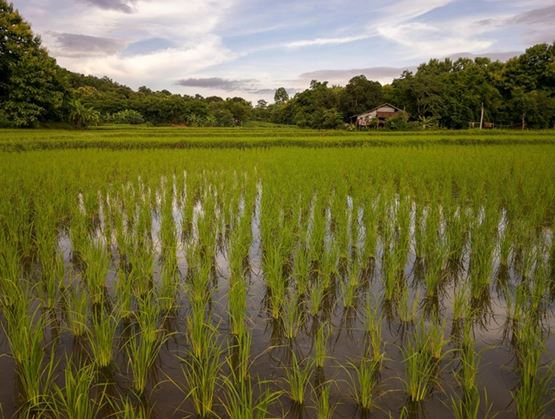
Sticky rice, also known as glutinous rice, has a history that stretches back several thousand years across Southeast Asia. Archaeological evidence suggests that varieties of glutinous rice were cultivated in the region as early as 3,000 to 4,000 years ago, particularly in areas that now correspond to Laos, northern Thailand and southern China. Unlike long-grain rice, glutinous rice contains a higher proportion of amylopectin, which gives it its characteristic sticky texture when cooked.
In northern Thailand and Laos, sticky rice has traditionally been the staple grain, often preferred over jasmine rice. It is eaten daily and holds cultural as well as practical significance. The rice is typically soaked, then steamed in woven bamboo baskets, a method that allows the grains to remain distinct while achieving their signature cohesion. This preparation technique has remained largely unchanged over generations and continues to define how sticky rice is consumed today.
Sticky rice also features prominently in religious and festive contexts. It is used in offerings to Buddhist monks and plays a role in seasonal celebrations, including harvest festivals. Its preparation often involves collective effort, reinforcing its association with community and continuity.
A seasonal dessert shaped by tradition
Mango sticky rice, known locally as khao niao mamuang, is deeply embedded in Thai food culture. It is traditionally consumed during mango season, which runs from April to June, when the fruit reaches peak ripeness and sweetness. The dish pairs glutinous rice with fresh mango and coconut milk, creating a contrast of textures and flavours that is both restrained and highly expressive.
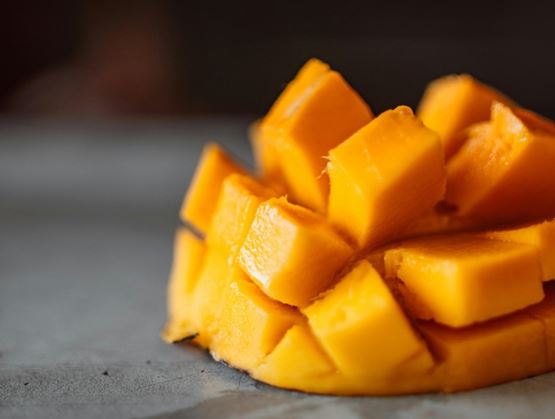
The combination of rice with coconut milk and sugar likely developed in regions where coconut palms were abundant, allowing cooks to enrich the neutral base of the rice with sweetness and fat. Combined with sugar and salt, it forms a sauce that enhances the natural sweetness of the mango while introducing a subtle savoury note. This balance between sweet and salty is characteristic of Thai cuisine more broadly.
Over time, mango sticky rice has moved from a seasonal street food to an internationally recognised dessert. Its visibility has increased significantly in recent years, partly driven by global tourism and social media exposure.
From street food staple to global icon
Traditionally sold by street vendors, mango sticky rice is assembled fresh, often in front of the customer. The rice is prepared in advance, but the final plating with sliced mango and coconut sauce is done just before serving. This immediacy ensures the dish retains its signature texture and temperature contrast.
Its rise to international prominence has been accelerated by digital platforms, where visually appealing desserts have gained traction. Mango sticky rice, with its vibrant colours and clean presentation, lends itself particularly well to this format.
Beyond its visual appeal, the dessert aligns with broader consumer trends. There is increasing demand for plant-based and naturally gluten-free products, both of which apply to mango sticky rice. As a result, it fits comfortably within evolving expectations across the food sector, where traditional recipes are being rediscovered through contemporary lenses.
At the same time, chefs and manufacturers have begun experimenting with variations. These include infused coconut creams, alternative grains, or reinterpretations in frozen and ready-to-eat formats. While these adaptations expand the dish’s reach, the original version remains defined by its simplicity and reliance on high-quality ingredients.
A dessert that reflects global food exchanges
Mango sticky rice illustrates how local traditions can resonate globally when they align with contemporary tastes and values. Its ingredients are simple, yet their combination involves a precise understanding of balance and seasonality. This ability to translate across cultures without losing its identity is part of what makes the dish enduringly relevant.
Within the broader context of the food innovation exhibition circuit, such recipes highlight the importance of authenticity alongside innovation. While new formats and technologies continue to reshape the industry, there remains strong interest in products and dishes that carry a clear cultural narrative.
SIAL Off contributes to this dialogue by bringing individual perspectives into focus. Through recipes like Gabrielle’s, it becomes possible to explore global food cultures not only as market trends but as lived experiences. This connection between personal storytelling and professional exchange mirrors the role of Sial Paris, where culinary traditions, product innovation and industry insights intersect.
Gabrielle’s mango sticky rice recipe
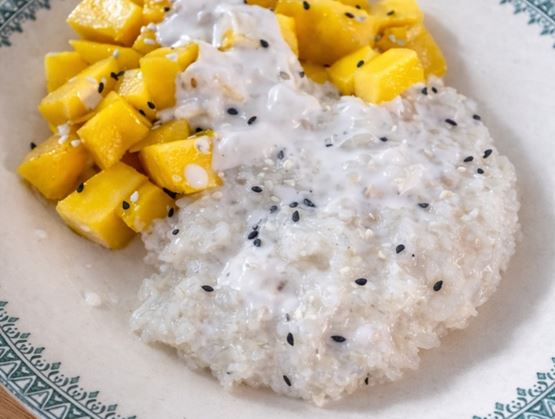
Gabrielle’s version stays close to the traditional preparation while ensuring accessibility for home cooking. The emphasis is placed on ingredient quality, particularly the choice of ripe mangoes and the careful preparation of the rice.
Ingredients
For the sticky rice
200 g glutinous rice
250 ml coconut milk
80 g sugar
A pinch of salt
1 sachet of vanilla sugar or a few drops of vanilla extract
1 to 2 ripe mangoes
For the topping
150 ml coconut milk
1 teaspoon cornflour diluted in 2 tablespoons of water
1 tablespoon sugar
A pinch of salt
For decoration
Sesame seeds
Method
Step 1 – Soak and cook the sticky rice
Rinse the glutinous rice several times in cold water until the water runs clear, being careful not to break the grains. Ideally, leave it to soak overnight to achieve a soft and glossy texture. Drain the rice, then steam it for 25 to 30 minutes or cook it using a rice cooker.
Step 2 – Prepare the sweet coconut cream
In a saucepan, combine 250 ml coconut milk, sugar, salt and vanilla sugar or extract. Heat gently while stirring and allow the mixture to reduce slightly until it thickens. Remove from the heat and pour the warm coconut cream over the cooked sticky rice. Mix thoroughly until the liquid is fully absorbed, then set aside.
Step 3 – Prepare the coconut topping sauce
In a small saucepan, mix 150 ml coconut milk, the diluted cornflour, sugar and salt. Heat gently, stirring continuously, until the sauce thickens slightly and reaches a smooth, coating consistency. Remove from the heat and allow to cool.
Step 4 – Prepare the mango
Peel the mangoes and cut them into slices or cubes according to preference. The fruit should be ripe, sweet and aromatic for the best flavour.
Step 5 – Assemble and serve
Place a portion of sticky rice on a plate. Arrange the mango alongside. Drizzle with the coconut topping sauce and finish with a sprinkling of sesame seeds before serving.
Image credits:
Michala Li - Unsplash
Roman Odintsov - Pexels
Tome De Decker - Pexels