
SUSTAINABLE INNOVATION IN THE FOOD SECTOR BEGINS WITH R&D

Research and development has long been associated with breakthrough products and new processing techniques. Today, in the food sector, it is increasingly framed as a response to environmental pressure, resource constraints and changing consumer expectations. Sustainability is no longer just a parallel objective. It is becoming embedded in how ingredients are sourced, how factories operate and how value is created across supply chains.
Across Europe and beyond, food companies are rethinking R&D as a long term investment in resilience. Climate volatility, regulatory pressure and rising costs are accelerating the shift towards low impact formulations, circular production models and data driven decision making. This evolution is not limited to start ups or niche players. It is now a defining feature of mainstream food industry strategy, from multinational groups to mid-sized manufacturers preparing their next generation of products.
From technology driven R&D to systems thinking
For years, food innovation was often associated with futurist concepts or isolated technological advances. Today, research agendas are becoming more systemic. According to the European SCAR framework on sustainable food systems, R&D must address production, processing, distribution and consumption as interconnected elements rather than separate challenges.
This shift is visible in the growing role of food innovation centres, which combine applied research, pilot scale facilities and industry partnerships. These hubs focus on reducing water and energy use, improving ingredient functionality and supporting alternative proteins or reformulated products with a lower environmental footprint. The emphasis is less on disruption and more on scalability and impact.
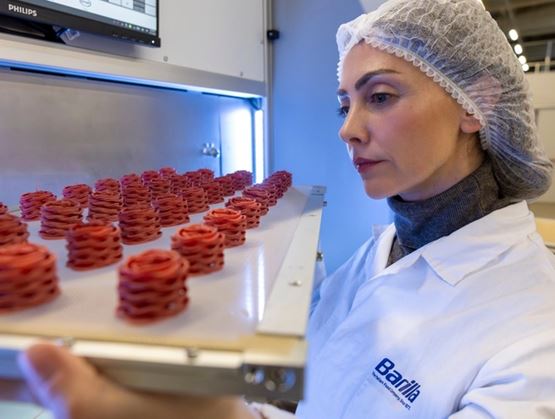
Large groups are also reorganising their research models. At Barilla Group, research into sustainable technologies spans renewable energy integration, alternative packaging materials and water stewardship. According to the group, innovation in processing technologies plays a critical role in reducing emissions while maintaining food safety and quality standards.
Barilla’s recent launch of its Barilla Innovation & Technology Experience (BITE) reflects this strategic pivot. The nearly 14,000 m² centre in Parma represents the company’s most significant investment in food innovation in years, bringing together around 200 specialists including food technologists, engineers, designers and chefs under one roof.
The facility blends state-of-the-art labs, pilot production lines, sensory testing spaces and collaborative zones where sustainable product concepts are developed, tested and refined before scaling. “Innovating means placing people’s desires at the centre. “Understanding in depth how their needs related to food and nutrition will evolve, and from there turning ideas into reality that are new, good, and sustainable,” explains Michele Amigoni, Head of Research, Development and Quality, emphasising how BITE is designed as an “open centre” where future food concepts are both imagined and explained.
The centre’s mission extends beyond product formulation to creating sustainable supply chain models. Research spans from regenerative agriculture trials to packaging innovation and the optimisation of energy and water usage on site. BITE also hosts partnerships with universities and research institutions across Europe, reinforcing Barilla’s role in a wider innovation ecosystem. It welcomes around 30 young talents annually through internship programmes, nurturing expertise in sustainable food science while strengthening the company’s global R&D footprint.
These activities complement Barilla’s broader sustainability commitments, including targets for increasing sustainably sourced wheat and expanding renewable energy use at its facilities. By integrating sustainability into every stage of research and development, Barilla illustrates how legacy food companies can evolve in response to environmental and societal expectations.
This approach reflects a broader trend across the food industry sectors, where R&D teams work closely with suppliers, farmers and technology partners. Digital tools, life cycle analysis and predictive modelling are now standard components of research projects, enabling companies to assess environmental impact at an early stage of product development.
Sustainability embedded in product and process innovation
Beyond laboratories, sustainability driven R&D is reshaping how food is processed and manufactured. The focus is increasingly on optimising existing processes rather than introducing entirely new ones. Energy efficient cooking methods, fermentation optimisation and waste valorisation are areas attracting sustained investment.
At Nestlé, research into sustainable technologies spans renewable energy integration, alternative packaging materials and water stewardship. According to the group, innovation in processing technologies plays a critical role in reducing emissions while maintaining food safety and quality standards. These efforts illustrate how R&D is now tightly linked to operational performance.
Product formulation is another key area. Reducing salt, sugar or fat content while preserving taste and texture requires advanced ingredient science. Similarly, the development of plant based or hybrid products demands research into protein functionality, sensory perception and nutritional balance. These challenges sit at the intersection of consumer demand and environmental responsibility.
In parallel, sustainability led research is extending into emerging product categories and reformulated ranges across the food sector. From fermentation processes to the reuse of by-products and side streams, R&D teams are exploring ways to extract greater value from raw materials while reducing waste. The result is an innovation pipeline increasingly guided by environmental performance indicators alongside commercial and consumer expectations.
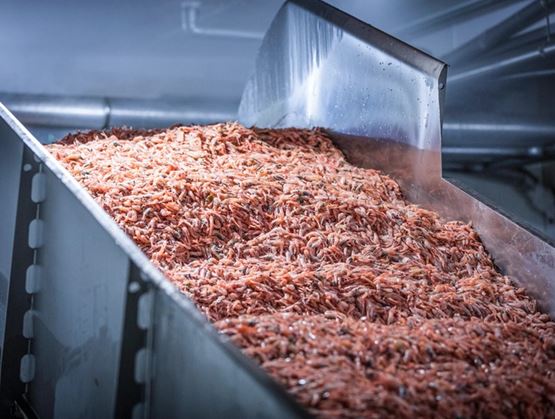
Danish biotech firm REDUCED recently entered a partnership with seafood supplier Royal Greenland to upcycle prawn processing side streams into high-performance taste solutions suitable for wider food applications. This initiative aims to extract value from materials that would otherwise be discarded, illustrating a circular approach to resource use.
From R&D strategy to the global marketplace
The final test of sustainable R&D lies in its ability to move from concept to market. Trade events play a critical role in this transition, providing visibility, validation and commercial traction. As a global food trade show, SIAL Paris brings together research driven innovations and the buyers, distributors and partners capable of scaling them internationally.
For exhibitors, R&D narratives are no longer confined to technical documentation. They are becoming central to brand positioning. Buyers increasingly expect transparency on sourcing, production methods and environmental impact. In this context, sustainability backed by credible research strengthens trust and differentiation.
The convergence of science, regulation and market demand is reshaping the role of R&D within the food sector. Innovation is no longer episodic. It is continuous, data informed and aligned with long term sustainability goals. This evolution explains why R&D has become a strategic theme across international food trade shows like SIAL Paris, where collaboration and knowledge exchange accelerate progress.
Image credits:
Barilla Group
REDUCED
ThisIsEngineering - Pexels