
BURGERS ON THE RISE: NEW FRANCHISES WIN OVER FRENCH CONSUMERS

Although now synonymous with the United States, the hamburger’s roots lie in 19th-century Germany. The “steak de Hambourg”, seasoned minced beef often served with fried potatoes, was a favourite among sailors departing from the port city of Hamburg. When these travellers reached America, they brought the recipe with them. Street vendors later sandwiched the meat between two pieces of bread, creating the format we recognise today.
By the early 20th century, the hamburger had become a defining feature of American fast-food culture through pioneering brands like White Castle and, later, McDonald’s. Yet in France, the burger would take a different path. Long perceived as a foreign indulgence, it began to infiltrate traditional menus in the early 2000s, and by 2023, it had fully conquered French dining. More than half of the meat eaten in France is now consumed as minced beef, and 52 per cent of the market’s volume relates directly to burgers. Once a novelty, the hamburger has become a fixture of both brasseries and bistros, firmly established as a dish in its own right.

A booming and diverse market
The scale of France’s burger consumption is staggering. In 2023 alone, an estimated 1.5 billion burgers were eaten nationwide, a figure that underscores how deeply the product has embedded itself in the country’s food culture. Over the last decade, burger sales have multiplied fourteenfold, while delivery orders have increased by 171 per cent in just four years. Today, one in four traditional restaurants offers at least one burger on the menu, and even fine-dining establishments have embraced the trend.
The result is an intensely competitive and segmented marketplace. At the mainstream end, global giants such as McDonald’s, Burger King and Quick dominate through their accessibility, uniform pricing and omnipresence. Yet a growing number of French consumers are seeking higher-quality alternatives, and entrepreneurs have responded.
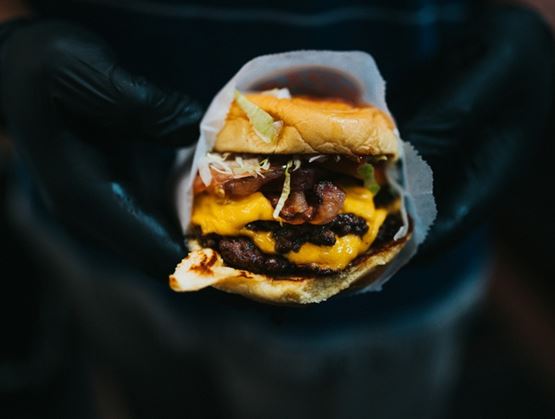
A new wave of “fast-casual” and gourmet burger brands has emerged, putting emphasis on premium ingredients, local sourcing and distinctive presentation. Bill’s Burger, for example, has popularised the “smash burger” in France, a cooking method where the beef patty is flattened and seared at high temperature for a crispy crust and deep flavour. The brand champions clean eating, using no artificial colourings, flavours or preservatives.
Black and White Burger, launched in 2018 by French influencer Ibra TV and his business partner Djam, has turned heads with its signature black-and-white buns and indulgent homemade sauces. Its burgers use Black Angus beef and generous portions, reflecting the shift towards gourmet street food with personality.
Meanwhile, La Cabane à Burger brings an artisanal touch to fast food. Created by three lifelong friends, a charcutier, a cheesemaker’s son and an accountant, the brand prioritises short supply chains, organic bread, AOP cheeses and freshly prepared ingredients. Most of its dishes are served to-go or enjoyed on terrace seating, reflecting France’s modern, flexible dining habits.
King Marcel embodies the phrase “burgers à la française”, marrying American efficiency with French terroir. Its menu evolves seasonally, featuring regional produce such as Saint-Marcellin and Bleu d’Auvergne cheese. Similarly, Les Burgers de Lucien delivers a more bistro-style experience built on authenticity and simplicity: bakery buns, French meats, local vegetables and homemade fries.
Sustainability-minded consumers have found their champion in Bioburger, the first 100 per cent organic burger chain in France. Every element, from beef to bread, is certified organic, and the brand reduces waste through eco-friendly packaging and a flexitarian menu that caters equally to meat eaters, vegetarians and vegans.
Reinventing the franchise model
Even the concept of the burger franchise itself is being reimagined. Burger de Jo, created by French rugby icon Sébastien Chabal and 2023 World Burger Champion Joannes Richard, takes a flexible approach: instead of building standalone restaurants, it partners with existing venues that temporarily feature the brand’s award-winning recipes on selected days. With a modest entry fee and shared logistics through Transgourmet, the model offers restaurateurs strong margins with minimal risk, a sign that the burger business is as much about creativity in operations as it is in the kitchen.
The French burger revolution
The rise of burger consumption in France is not just about changing tastes; it illustrates a shift in national identity around food. Once seen as an emblem of American convenience, the burger has been thoroughly domesticated, adapted to French values of quality, locality and conviviality.
As consumer expectations evolve, the challenge for burger franchises is to balance indulgence with responsibility, flavour with ethics, and accessibility with craftsmanship. Whether it’s a charcoal-bun gourmet burger in Paris, an organic takeaway in Lyon, or a rustic burger served in a countryside brasserie, the hamburger in France has transcended its origins and in true French fashion, elevated fast food to an art form.
Image credit: Miha Rekar - Unsplash
Image credit: Nathan Dumlao - Unsplash