
FRENCH TOAST: A TIMELESS FAVORITE REIMAGINED

Today, French toast appears everywhere: at breakfast buffets, in refined brasseries, on Michelin-level tasting menus and in pâtisserie boutiques. Whether served as a golden brioche cube, a brûléed slice perfumed with vanilla, or even a savoury reinterpretation, French toast has evolved far beyond its humble origins. Gault&Millau, the influential French culinary guide, highlights several chefs who elevate pain perdu to an art form. Their creations illustrate just how far this once modest dish has travelled.
From resourceful households to refined gastronomy
Historically, French toast emerged as a thrifty way to avoid wasting bread. Pain perdu, which translates literally to “lost bread”, is made by soaking stale slices in milk and eggs before frying, creating a sweet, restorative treat accessible to everyone. Over time, families added vanilla, sugar, cinnamon, or butter depending on local traditions. Despite regional variations, the spirit of the dish has remained the same: transforming the simplest ingredients into something deeply comforting.
In recent years, however, the recipe has been reimagined by bakers and chefs who have transformed it into a dessert worthy of the finest dining rooms. Brioche has replaced rustic bread; vanilla pods, citrus blossom, caramel and elaborate creams now enhance the flavour; textures have become central to the experience. French toast is no longer just a home recipe, it is a culinary signature.
Among the many interpretations, four stood out to Gault&Millau for their remarkable balance of technique, flavour and imagination.
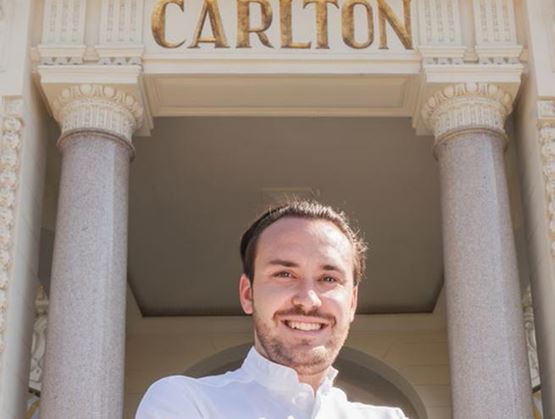
Anthony Coquereau’s nostalgic, caramelised brioche
During his tenure as pastry chef at Fouquet’s Paris, and before joining the Carlton Cannes, Anthony Coquereau created a French toast that paid homage to the flavours of his childhood while elevating them to brasserie refinement. He started with a fresh, aromatic brioche, lightly toasted to keep the centre tender while forming a delicate crust. The slice was then soaked in a velvety crème anglaise, infusing it with deep vanilla notes, before being gently caramelised in the pan to achieve a thin, glossy glaze. Served with salted-butter caramel or a perfectly sculpted quenelle of vanilla ice cream, Coquereau’s version was a lesson in contrasts: crisp on the outside, melting within.
Anne Coruble’s elegant breakfast interpretation
At Le Peninsula Paris, pastry-chef Anne Coruble, who was recently named “Pâtissière de l’Année 2026” (Pastry Chef of the Year) by Gault & Millau, revisits pain perdu through the lens of breakfast, bringing finesse, lightness and a touch of playfulness. Her brioche is slightly sweet, oven-toasted and then soaked in a fragrant mixture rich in vanilla with a hint of orange blossom.
Coruble’s hallmark is elegance: she pairs the warm brioche with a silky hazelnut creaminess and roasted hazelnut chips. The result is a refined and delicate version that balances indulgence and lightness. Though found on the breakfast menu, it has all the qualities of a plated dessert worthy of a grand hotel dining room.


La Mirande, Avignon: Florent Pietravalle’s bold, modern re-invention
Florent Pietravalle, head chef at La Mirande in Avignon, offers one of the most unconventional takes on French toast in France today. Staying true to the restaurant’s creative spirit, he integrates mushrooms grown directly in La Mirande’s cellar into his reinterpreted pain perdu.
To preserve the dessert character while embracing savoury nuance, Pietravalle serves his French toast with bread chips, a quenelle of miso bread ice cream and delicate shavings of button mushrooms seasoned with soyu. The result is surprising, precise and entirely contemporary, a daring reinterpretation that stretches the boundaries of what French toast can be.
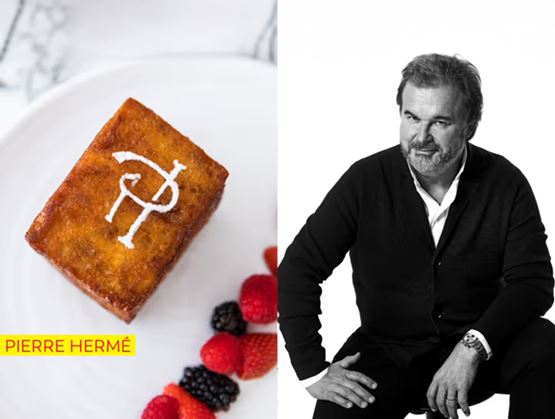
Pierre Hermé: a perfect brioche cube crafted with precision
Pierre Hermé’s version of French toast is an ode to texture and fragrance. Often described as one of the most influential pastry chefs of his generation, Hermé presents the dessert as a generous cube of brioche, infused with vanilla and caramelised in semi-salted butter. The contrast between the crisp exterior and the melting interior is central to his approach, with seasonal fresh fruit added for brightness and balance.
This interpretation is a model of its kind: rich, comforting and technically flawless, a perfect example of how Hermé continues to set the standard for contemporary French pastry creation.
French toast’s bright future
What unites all these interpretations is the way they celebrate transformation: turning familiar flavours into sophisticated experiences. Once a clever way to use leftover bread, French toast is now a symbol of French culinary creativity, a dish that invites chefs to experiment, reinterpret and push boundaries.
From Parisian palaces to inventive kitchens in Avignon, pain perdu continues to inspire chefs who celebrate its comforting simplicity while pushing its flavours in new directions. A humble classic, endlessly revisited, it remains one of France’s most cherished culinary pleasures.
At SIAL Paris, visitors can discover all the essentials for French toast, from premium French dairy products and sweet grocery and confectionary exhibitors to creative plant-based alternatives. Across the show’s diverse food sectors, classic ingredients meet innovative plant-based alternatives, offering endless ways to reinterpret this beloved dessert.