
FRENCH ONION SOUP: A TIMELESS CLASSIC

Each bowl of French onion soup tells a story of transformation. What begins as a humble vegetable becomes something layered, slow and complex. Beneath the golden crust of melted cheese lies a broth shaped by patience and repetition. Its origins are often described as rustic, yet over time the dish has acquired an almost ceremonial presence in French brasseries, particularly on winter evenings when warmth is sought in both flavour and atmosphere.
From market staple to royal table
Onions have been cultivated in France since Roman times, valued for their resilience and affordability. According to historical accounts frequently cited in culinary literature, onion soups were common among working people because the ingredients were inexpensive and widely available. The base of onions, bread and liquid formed a nourishing meal that required little beyond time and a steady fire.
One enduring legend links the modern version of French onion soup to King Louis XV. The story recounts that the king, finding himself with little more than onions, butter and champagne in a hunting lodge, prepared the soup himself. Historians question the accuracy of this anecdote, yet it captures how the dish bridges social boundaries, moving from peasant fare to royal table.
The technique that defines the soup lies in the caramelisation of onions. Slowly cooked in butter, they develop a deep sweetness that balances the savoury broth. Flour is often added to give slight body before the soup is topped with bread and grated cheese, traditionally Gruyère or Comté, then placed under a grill until the surface becomes golden and blistered. The crust forms a seal, trapping aroma and creating the contrast between liquid and bread that has come to define the dish.
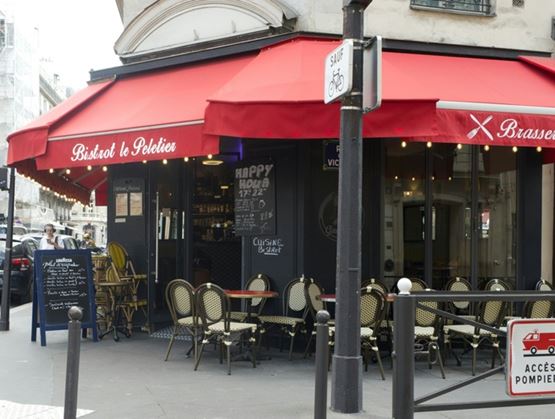
By the nineteenth century, French onion soup had become closely associated with Les Halles in Paris. Market workers and late night visitors sought it out in the early hours. It gained a reputation as a restorative dish, reinforcing its place in urban food culture.
Technique, variation and the brasserie ritual
Although the essential ingredients remain constant, variations appear across regions and kitchens. Some recipes rely on beef stock to deepen flavour, while others depend on water and the intensity of the onions themselves. White wine may be added during cooking, though many traditional preparations omit it entirely.
The bread component also shifts according to preference. Thick slices of rustic country bread are typically placed directly on the soup before cheese is scattered over the top. In certain interpretations, croutons are toasted separately to maintain firmness. The cheese layer may be restrained or abundant, depending on the character of the establishment.
French chefs have long treated onion soup as a touchstone of technique. Auguste Escoffier included it among the foundations of classical cuisine in his codified repertoire. More recently, chefs such as Alain Ducasse have revisited brasserie staples with refined execution while preserving their spirit.
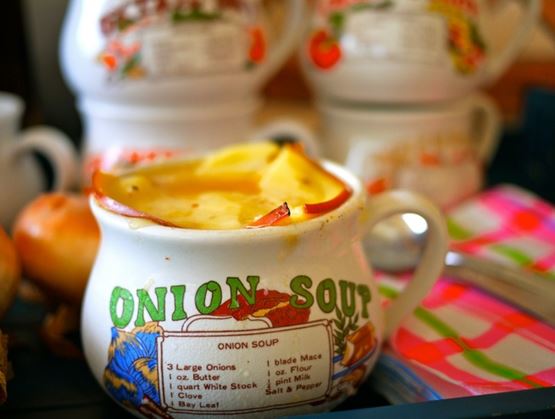
The ritual of service is central to its identity. The soup is presented in a small handled bowl, often still bubbling from the grill. The surface must be broken before the first spoonful can be taken. This simple act reinforces anticipation.
Outside France, adaptations reflect local taste. In the United Kingdom and North America, French onion soup appears on bistro menus as a familiar starter. Portions may be larger and the cheese more generous, yet the fundamental structure remains the same.
A living tradition within SIAL Off
French onion soup endures because it demonstrates how modest ingredients can generate depth through care and time. It relies on patience rather than embellishment and illustrates how culinary identity is constructed through repetition.
This perspective resonates strongly with SIAL Off, the cultural extension of SIAL Paris. Conceived as a way to experience the city beyond the exhibition halls, SIAL Off highlights restaurants, cafés and food addresses that reflect everyday French gastronomy. It operates alongside the international food industry trade show, not as a showcase of products, but as an invitation to understand context. Through SIAL Off, visitors encounter the gestures, habits and flavours that define Parisian food culture.
In this framework, French onion soup represents the type of dish that professionals attending SIAL Paris may encounter in neighbourhood brasseries after a day at the show. While the exhibition floor focuses on the evolution of the food sector, SIAL Off reminds participants that culinary change is grounded in enduring practices.
By connecting contemporary debates with everyday cooking, SIAL Off situates heritage within the broader narrative of food today. French onion soup, with its layered simplicity, offers a clear example of how tradition continues to inform modern gastronomy without seeking reinvention for its own sake.
As part of SIAL Off, Julien shares his version of this enduring classic.
Famous French Onion Soup by Julien
Ingredients for 4 people:
800 g yellow onions
70 g butter
1.5 cl water (adjust if necessary)
25 g flour
4 slices country bread
As many grams of grated Emmental or Comté as desired
Salt and pepper
Method:
Step 1
Peel and finely slice the onions. Place them in a heavy based saucepan with the butter and 10 cl of water. Cover and allow to soften over a low heat for 35 to 40 minutes, stirring regularly.
Step 2
Add a little flour, mix well, then allow the onions to turn lightly golden without browning too much, in order to avoid bitterness.
Step 3
Pour in 1.5 litres of boiling water and simmer gently for 15 minutes. Season with salt.
Step 4
Preheat the oven grill.
Divide the soup into individual ovenproof bowls. Place a slice of country bread on the surface of each bowl, sprinkle generously with grated cheese, then transfer immediately to the oven.
Step 5
When the cheese is fully melted and golden, remove the bowls from the oven and serve without delay.
Step 6
Enjoy.
Julien also recommends the French onion soup at Terminus Nord, a historic brasserie opposite the Gare du Nord, known for its faithful and generously cheesy interpretation of the classic.
Image credits:
Sheri silver for Unsplash
Leila Issa for Unsplash
Kevin Dowling for Unsplash