LIMBUA: BUILDING RESPONSIBILITY FROM FARM TO GLOBAL MARKET

SIAL For Change was launched at SIAL Paris 2024 as the show’s first award dedicated to Corporate Social Responsibility, created in partnership with the CSR agency Hyssop. Its purpose was not to reward intention alone, but to highlight companies embedding responsible practices throughout their strategy, operations and supply chains. In a global food sector increasingly asked to prove, not just promise, its social and environmental value, the initiative gave visibility to businesses working on the harder questions: how food is grown, who benefits from its trade, how ecosystems are protected and how value can remain closer to the communities that produce it.
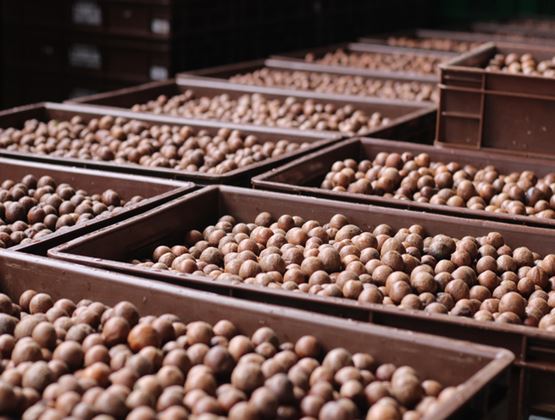
For LIMBUA, a German-Kenyan company built around organic macadamia nuts, mangoes and avocados, SIAL For Change 2024 became a powerful international stage. The company’s model covers the supply chain from nursery to export and worldwide distribution, with full traceability and a strong commitment to smallholder farming. Its participation at the last edition of SIAL Paris placed that model in front of buyers, partners and industry stakeholders looking for credible examples of responsible sourcing.
A supply chain rooted around Mount Kenya
LIMBUA works with more than 9,000 smallholder farmers in Kenya, sourcing macadamia nuts, mangoes and avocados through direct cooperation. Over the past year, the company says it expanded its smallholder network by 2,000 members and supported them in obtaining organic certification. This growth is not a side note. It sits at the core of LIMBUA’s business proposition: creating an export-ready supply chain that can deliver certified organic products to international markets while strengthening rural livelihoods.
The company’s operations combine organic farming, local processing and digital traceability. LIMBUA has developed its own digital quality management system, allowing organic raw materials to be traced from farm to processing site, onward to logistics centres in Mombasa and Rotterdam, and finally to its warehouse in Germany. For international buyers, this level of transparency matters. For farmers, it helps build direct relationships, traceable pricing and more reliable harvest purchasing.
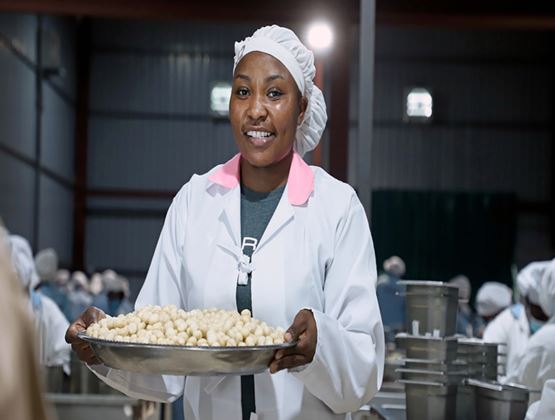
Around Mount Kenya, the model also has a social dimension. Macadamia nuts are cracked by hand, a labour-intensive process that reduces energy use while supporting employment in a rural region. LIMBUA’s approach has helped create jobs locally, with seasonal employees able to return the following season and a longer-term ambition to offer more permanent positions. The company also contributes to health, nursing and pension insurance, a practice it describes as unusual in the African context.
Organic growth, regenerative ambitions
LIMBUA’s environmental position goes beyond organic certification. The company works with diverse crops to reduce dependence on a single income stream and to support biodiversity. Macadamia, mango and avocado can form part of a broader mixed cultivation system, giving farmers greater financial security while reducing monoculture pressure. According to the company, no artificial irrigation is used thanks to annual rainfall, helping to limit water stress within its farming model.
The company has also pursued demanding certification pathways. Alongside existing certifications, LIMBUA has obtained Naturland certification, which builds on the EU organic standard and goes further in several areas. LIMBUA states that it is now the world’s first Naturland-certified macadamia producer. It has also sought high-level standards such as Regenerative Organic Certified, reflecting a wider movement in the food innovation exhibition space towards regenerative agriculture, soil health and more resilient sourcing models.
Waste reduction is another part of the picture. LIMBUA promotes the recycling of macadamia by-products, including shells and skins. Through its foundation, it also supports the training of children in organic farming, with practical learning in school gardens. The result is a company narrative that connects export, education, biodiversity, local employment and long-term farming knowledge.
What SIAL For Change brought to LIMBUA
For LIMBUA, SIAL For Change 2024 offered more than a badge of recognition. It gave the company a platform to tell a complex story in a setting designed for international food business. In its testimonial, the company explains: “Our participation in SIAL For Change 2024 enabled us to increase our visibility and establish important relationships within the sector.”
The competition also helped LIMBUA connect with an audience aligned with its priorities. “SIAL For Change 2024 was a valuable experience for us,” the company says. “The competition gave LIMBUA and our sustainability efforts international visibility and enabled us to connect with stakeholders who share our commitment to social and environmental responsibility and innovation.”
That visibility matters because responsible supply chains are often difficult to communicate quickly. A product such as a macadamia nut may look simple on a shelf, in a bakery formulation or inside a premium snack, but its value depends on a chain of decisions: farm practices, farmer relationships, transport, processing, labour conditions, certification, waste management and market access. SIAL For Change gave LIMBUA a format in which those layers could be made visible to professional audiences.
From recognition to a wider movement
LIMBUA’s story reflects the direction SIAL For Change is taking in 2026. The initiative will return to SIAL Paris from 17 to 21 October 2026 at Paris Nord Villepinte, with a dedicated space of 200 square metres in Hall 6 throughout the five days of the show. Building on the momentum of the 2024 edition, SIAL For Change will place CSR initiatives, sustainable innovation and social impact at the centre of the visitor experience.
The 2026 competition will bring together start-ups, SMEs and large companies from across the agri-food sector. Participants will be assessed on criteria including originality, impact, scalability and alignment with sustainability objectives and CSR principles. The awards ceremony is scheduled for 18 October 2026 on the SIAL Talks stage.