
ORIGIN BECOMES A PASSPORT TO FLAVOUR

SIAL Insights 2026 is a trend report developed by the SIAL Paris team to map the forces reshaping food and foodservice markets. Its ten insights draw on research from Kantar, ProtéinesXTC and Circana across France, Europe and global markets. Insight 4 captures a revealing shift: consumers are not retreating into the local, nor abandoning it for global discovery. They are moving between both.
Origin has become part of the value proposition. The SIAL Insights 2026 report finds that 72% of consumers worldwide are paying increasing attention to product provenance, while 71% prefer products made in their region or close to where they live. In France, 62% of grocery retail shoppers favour products made in France or within their region. At the same time, 95% of respondents globally say they are interested in at least one foreign cuisine.
Proximity becomes a quality cue
Local sourcing has moved beyond a simple distance claim. Packaging that identifies a producer, mentions a nearby community or specifies production within a defined radius turns geography into something tangible. The appeal lies partly in reassurance: a product that feels closer can also feel easier to understand.
Proximity increasingly works alongside cues such as craftsmanship, traceability, freshness and perceived quality. SIAL Insights notes that 27% of consumers globally, and 29% in France, say they are eating more locally sourced products than before.
For brands across the food sector, that changes how origin can be communicated. A region is no longer simply the point at which a product was made. It can become part of the product identity, connecting ingredients, people and techniques to place.
Authenticity travels
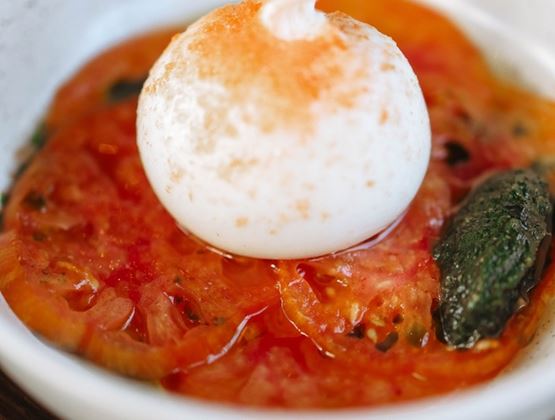
The same desire for rootedness also explains why consumers can be attracted to products from much further away. Mozzarella tied to Italy, feta associated with Greece or honey from Provence carries a particular cultural and culinary context. Distance does not necessarily weaken authenticity. In some cases, it strengthens it.
Protected origin labels reinforce this relationship. In the European Union, PDO and PGI schemes protect names whose qualities, characteristics or reputation are linked to a particular geographical origin.
Interest remains substantial. SIAL Insights reports that 63% of consumers globally pay increasing attention to official quality labels such as PDO and PGI. ProtéinesXTC also recorded 28% growth in the number of products highlighting local or regional specialities.
The result is a broader definition of “local”. A product can be local to the shopper, or local to somewhere else and valued precisely because it represents that place faithfully.
Global curiosity becomes more precise
This appetite for elsewhere is becoming more specific. Global cuisines are no longer consumed only through broad national labels. Interest is increasingly moving towards regions, cities, traditions and techniques with a sharper sense of origin.
That development mirrors the wider search for culinary discovery identified in SIAL Insights 2026. A distant origin can operate as a passport to flavour, giving a product both a story and an expectation of difference.
For manufacturers and retailers, the opportunity lies in avoiding generic exoticism. The more consumers learn about international food cultures, the less convincing vague references become. Place needs substance: recognisable ingredients, credible recipes, clear provenance and, where relevant, protected designations or regional know-how.
This creates fertile ground for a food innovation show, because innovation can also mean presenting a specific food tradition to a new market, adapting formats without stripping away identity, or making a regional speciality accessible to new consumers.
Origin as a bridge, not a boundary
Insight 4 describes a market less divided than it first appears. Consumers can want French produce and Korean flavours, a nearby cheesemaker and an Italian PDO, short supply chains and culinary travel. Trust and curiosity can sit in the same basket.
That dual appetite gives provenance new strategic weight. Origin can signal quality, differentiate products and create emotional connection, whether the place in question is ten kilometres away or on another continent.
At SIAL Paris 2026, taking place from 17 to 21 October at Paris Nord Villepinte, this tension between reassuring proximity and desirable distance will be visible across categories, countries and product stories. For a global food industry trade show, the appeal is especially relevant: the future of food may be increasingly international, but its most compelling products are often those that can say exactly where they come from.
Image credits:
Valeria Boltneva - Pexels
makafood - Pexels