
THE ART OF MASTERING CARBONARA

SIAL Off expands the experience of international gastronomy into Paris itself, offering a curated selection of restaurants, food shops and cultural venues that reflect the diversity of the global food scene. Designed for visitors and exhibitors alike, it provides a more informal and immersive way to explore culinary culture. Alongside these recommendations, members of the SIAL Paris team contribute personal recipes, often influenced by meals tasted during travels or encounters in these venues. Maria Vittoria’s go-to carbonara recipe draws on a classic Roman preparation as executed by Chef Simone Zanoni at Le George, the Michelin-starred restaurant at the Four Seasons Hotel George V.
A dish shaped by history and debate
Few Italian dishes have sparked as much discussion as pasta carbonara. Widely associated with Rome, its origins remain uncertain, reflecting a blend of regional traditions and historical circumstances. One theory links the name to the “carbonari”, charcoal workers in the Apennine mountains, who are said to have prepared simple, hearty meals over open fires. Another widely cited explanation situates the dish in the aftermath of the Second World War, when American soldiers stationed in Italy brought with them rations of powdered eggs and bacon. These ingredients, combined with local pasta and cheese, may have influenced the development of what would become carbonara.
What remains undisputed is the dish’s evolution into a symbol of Roman cuisine. Traditional carbonara relies on a precise balance of ingredients: pasta, guanciale, eggs, pecorino romano and black pepper. Notably absent are cream and garlic, additions that have appeared in international variations but are firmly rejected in the original preparation. This adherence to simplicity is part of a broader characteristic of Italian culinary heritage, where technique and ingredient quality take precedence over complexity.
Over time, carbonara has become a global reference point within the food sector, illustrating how regional recipes can travel, adapt and sometimes be reinterpreted. Its popularity has been reinforced by restaurant culture and media exposure, but also by leading chefs who continue to emphasise authenticity while refining execution.
Technique and precision at the heart of the recipe
Maria Vittoria’s version follows the method championed by Simone Zanoni, focusing on precision rather than reinterpretation. The preparation begins with careful organisation. Each ingredient plays a specific role, and timing is essential. Black pepper is crushed to release its aroma, guanciale is sliced finely to ensure even cooking, and the cheeses are grated in advance to facilitate smooth integration into the sauce.
Cooking the pasta is the starting point. Spaghetti is boiled in salted water but removed halfway through the cooking time. This partial cooking allows it to be finished in the pan, where it absorbs flavour and develops a creamy texture.
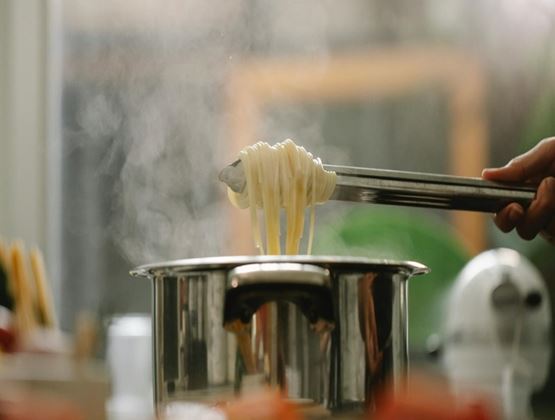
Cooking the pasta is the starting point. Spaghetti is boiled in salted water but removed halfway through the cooking time. This partial cooking allows it to be finished in the pan, where it absorbs flavour and develops a creamy texture.
The technique of finishing the pasta in the pan, often compared to risotto, is central to achieving the desired consistency. Gradual additions of pasta cooking water help emulsify the sauce, creating a silky coating without the need for cream. The egg mixture, prepared separately with pecorino, Parmigiano Reggiano and pepper, is added off the heat. This step requires particular attention, as excessive heat would scramble the eggs rather than produce the smooth, glossy texture that defines the dish.
The perfect carbonara is about both authentic ingredients and method. The balance between quality products, heat, timing and emulsification determines the final result, making for a dish that once mastered, offers a delicious expression of Italian culinary precision, where simplicity and technique come together in perfect harmony.
A global classic within a contemporary food landscape
Carbonara’s enduring appeal stems from its ability to bridge tradition and modernity. While rooted in Roman culinary identity, it has become a reference dish across international kitchens. Its simplicity aligns with current consumer interest in authenticity and provenance, where fewer ingredients and clear origins are increasingly valued.
At the same time, like so many local specialties that become global dishes, variations incorporating cream or alternative proteins show how recipes evolve when they travel, shaped by local tastes and available ingredients. Yet the persistence of the original version underscores the importance of culinary heritage as a point of reference.
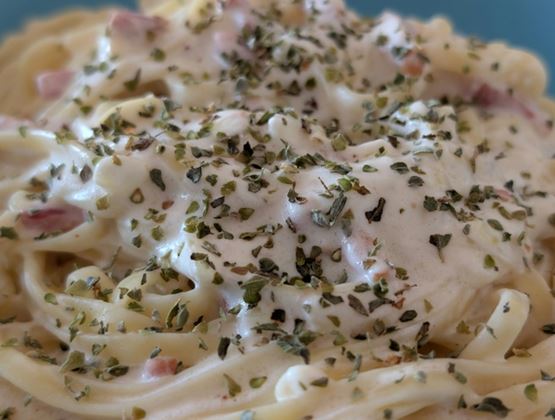
SIAL Off reflects this dynamic by connecting professional food environments with everyday culinary experiences. By guiding visitors through Paris’s gastronomic landscape while sharing recipes such as this one, it reinforces the idea that food is both a product and a cultural expression. In that sense, a plate of carbonara becomes more than a dish. It is part of a wider narrative linking tradition, travel and innovation, themes that continue to define discussions at SIAL Paris.
Here is Simone Zononi’s pasta carbonara recipe, as recommended by Sial Paris’ Maria Vittoria:
Pasta carbonara
Ingredients for four people:
480 g artisanal spaghetti
120 g guanciale
120 g pecorino
80 g Parmigiano Reggiano
2 whole eggs and 4 egg yolks
6 g black pepper berries
Preparation steps:
- Prepare all ingredients in advance to focus fully on cooking. Crush the pepper using a mortar. Cut the guanciale into very thin strips. Grate the pecorino and Parmigiano. Place the eggs and yolks in a small bowl.
- Cook the spaghetti in a large volume of salted water, using 5 g of salt per litre. Stop the cooking at half the indicated time.
- Brown the guanciale in a large pan without adding fat. Add half of the crushed pepper.
- Set the browned guanciale aside. Add a ladle of pasta cooking water to the pan containing the guanciale fat to form the base of the sauce.
- Transfer the pasta directly from the water into the pan without draining completely. Reserve the cooking water.
- Continue cooking the pasta in the pan, adding ladles of cooking water as needed. The pasta should finish cooking in the pan, gradually absorbing the liquid, similar to a risotto.
- While the pasta finishes cooking, beat the eggs and yolks, adding the remaining pepper, grated cheeses and a small amount of cooking water. Mix until creamy.
- Once the pasta is cooked, turn off the heat and allow the pan to cool slightly.
- Gently incorporate the egg mixture, stirring carefully. If the pan is too hot, the eggs will cook too quickly and lose their creamy texture.
- Serve immediately, adding the remaining sauce, a sprinkling of pecorino and the reserved guanciale.
Image credits:
Chris Weiher - Unsplash
David Vives - Unsplash
Klaus Nielsen - Pexels