
A NATURALLY GLUTEN-FREE TASTE OF CORSICA

SIAL Off takes the experience of international gastronomy beyond the exhibition halls and into Paris itself. Conceived as a guide for visitors and exhibitors, it brings together a curated selection of restaurants, bars, food shops and museums, places for food, fun, shopping and inspiration. Its 60 addresses invite professionals to experience culinary culture in a more informal, immersive way, guided by the SIAL Paris team and its partners.
Alongside these recommendations, members of the SIAL Paris team are also sharing personal recipes, often inspired by travels, family traditions or discoveries. This time, Maelle turns to Corsica with a soft, fragrant cake built around chestnut flour and chestnut cream. It is regional, generous and naturally gluten-free, provided that the baking powder used is certified gluten-free.
Chestnut flour, a historic ingredient with new relevance
Long before gluten-free became a market category, many traditional cuisines already used ingredients that contained no wheat, barley or rye. Rice flour in parts of Asia, maize in Latin America, buckwheat in Brittany and Eastern Europe, chickpea flour around the Mediterranean and chestnut flour in mountainous regions all formed the basis of everyday dishes.
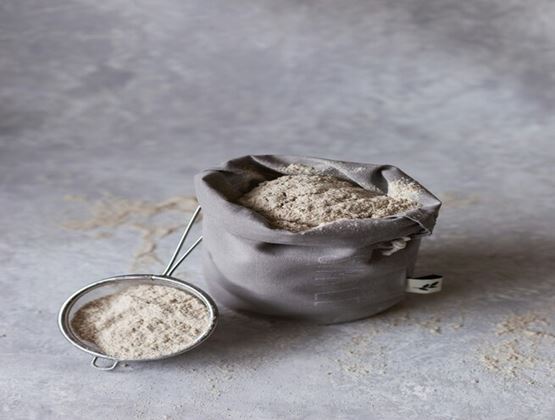
Corsica is one of Europe’s emblematic chestnut territories. Chestnut trees have long shaped the island’s rural food culture, particularly in inland areas where chestnut flour was used for breads, cakes, porridges and pulenta. Corsican Chestnut Flour is protected under a PDO. According to France’s INAO, it is made from ancestral local chestnut varieties and is recognised for its fine, homogeneous grind and colour ranging from cream-white to reddish brown.
Its flavour is what makes it so distinctive. Corsican chestnut flour brings gentle sweetness, toasted notes and a slightly biscuity aroma. It gives cakes a dense, melting texture without needing wheat flour.
Gluten-free baking moves beyond substitution
The gluten-free market has matured significantly. It is no longer only about removing gluten from standard bakery products. It is increasingly about taste, nutrition, texture and provenance. Fortune Business Insights valued the global gluten-free bakery products market at USD 2.60 billion in 2025, with projections suggesting growth from USD 2.92 billion in 2026 to USD 7.38 billion by 2034, at a CAGR of 12.26%.
Yet the segment faces pressure too. Specialist gluten-free products can be expensive, and consumers increasingly expect better quality for the price. In the UK, recent reporting from the Guardian highlighted the cost gap between standard bread and gluten-free alternatives, while Mintel data cited in the same report suggested that gluten-free products fell from 19% of new food launches in 2019 to 12% in 2025.
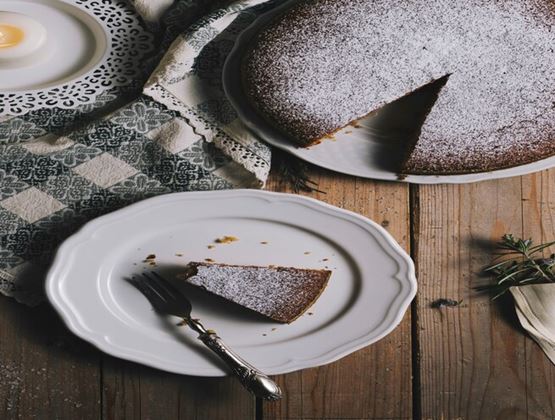
This creates space for another approach: naturally gluten-free recipes rooted in culinary tradition rather than technical imitation. Chestnut cake is a good example. It does not try to recreate wheat-based sponge. It has its own logic. The flour is not a substitute but the main flavour. The result is closer to a lava cake than a classic cake, soft in the centre, rich with butter and rounded by chestnut cream.
At SIAL Paris 2026, this trend will be reflected in several ways. The show, taking place from 17 to 21 October 2026 at Paris Nord Villepinte, brings together the international food industry around innovation, sourcing, retail and hospitality. SIAL Paris exhibitors include a wide range of specificities, from organic and dietary products to gluten-free, delicatessen and other grocery categories.
That is what gives a simple chestnut cake its relevance. It belongs at once to home cooking, regional gastronomy and broader market change. It speaks to the renewed interest in traditional recipes that already solve modern dietary questions without losing pleasure.
Corsican chestnut cake
This recipe is designed for a small, very soft cake. For an even more lava-like texture, Maelle suggests reducing the baking time by two minutes. The centre should remain tender rather than fully cooked.
Ingredients:
3 eggs
50 g sugar
150 g butter
80 g chestnut cream
90 g chestnut flour
Half a sachet of baking powder, ideally certified gluten-free
Method:
Beat the eggs with the sugar until the mixture becomes smooth and slightly airy.
Add the chestnut cream and mix again until fully incorporated.
Melt the butter gently, then add it to the mixture while continuing to beat. Add the chestnut flour and baking powder, then stir until the batter is even and glossy.
Butter the cake tin generously.
Bake for no more than 15 minutes. For those who prefer a very soft, almost molten texture, reduce the baking time by around two minutes.
The cake can be served slightly warm, when the chestnut aroma is at its most expressive, or at room temperature with coffee, tea or a glass of sweet wine. Its simplicity is part of its charm. A handful of ingredients, a short baking time and a strong regional identity are enough.
For visitors looking to try the cake in Paris, Maelle recommends À l’Heure du Vin in the 2nd arrondissement.
Through SIAL Off, this kind of recipe becomes part of a wider journey through food. It connects a Parisian itinerary with Corsican heritage, home baking with international trends, and personal memory with the conversations shaping the food exhibition 2026.
Image credits:
Quynh Do for Unsplash
Enrico Bet for Unsplash
Olga Kudriavtseva for Unsplash